Degrees of Fault
Defining Simple Negligence: The Common Oversight
Simple negligence is often described as a “lapse in judgment” or a momentary failure to be careful. It does not involve an intent to cause harm, but rather a failure to live up to a Duty of Care. We all encounter simple negligence in our daily lives, such as a driver who momentarily looks away from the road to adjust the radio or a store owner who fails to mop up a spill quickly enough.
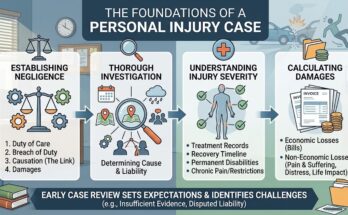
To prove simple negligence, a plaintiff must show four elements: Duty, Breach, Causation, and Damages. If a reasonable person would have seen the spill and cleaned it, but the store owner did not, they have likely committed simple negligence.
Examples of Simple Negligence:
- A driver running a stop sign because they were distracted by a passenger.
- A homeowner failing to repair a broken step on their porch.
- A restaurant server accidentally spilling hot coffee on a patron.
Defining Gross Negligence: Reckless Disregard
Gross negligence is a much higher hurdle to prove. It goes beyond mere carelessness and enters the territory of reckless disregard for the safety or lives of others. It is an extreme departure from the ordinary standard of care. In a case of gross negligence, the defendant’s actions are so egregious that they imply a “conscious indifference” to the consequences.
While intent to harm is still not required (that would be an “intentional tort”), the behavior is so risky that the law treats it with far greater severity. For instance, while a distracted driver might be simply negligent, a driver traveling 100 mph through a school zone while intoxicated is likely guilty of gross negligence.
- A trucking company forcing a driver to work 20 hours straight in violation of ELD laws, leading to a catastrophic crash.
- A surgeon performing an operation while under the influence of illegal substances.
- A nursing home failing to provide any food or water to a resident for several days.
| Feature | Simple Negligence | Gross Negligence |
|---|---|---|
| Level of Care | Failure to use “reasonable” care | “Shocking” lack of care |
| Behavior | Accidental, careless, or oblivious | Reckless, willful, or indifferent |
Why the Distinction Matters for Your Claim
The distinction between these two types of fault has profound legal implications, particularly regarding Damages.
- Compensatory Damages: In both cases, the victim is entitled to money for medical bills, lost wages, and pain and suffering.
- Punitive Damages: These are almost never awarded in simple negligence cases. However, in cases of gross negligence, a jury may award punitive damages specifically to punish the defendant and deter others from similar reckless behavior.
- Liability Waivers: Many businesses use “waivers of liability” (like at a gym or ski resort). In many jurisdictions, these waivers can protect a company from simple negligence but are legally void when it comes to gross negligence.

Conclusion: Seeking Accountability for Extreme Risks
In conclusion, while every injury deserves attention, the law recognizes a significant moral and legal gap between a simple mistake and a reckless choice. Simple negligence is a part of human fallibility, but gross negligence is a violation of the basic social contract we have to keep one another safe from extreme risks.
For an injured person, identifying the level of negligence is the first step in building a strategic case. It requires a deep dive into the evidence—reviewing safety logs, witness statements, and expert analysis—to determine if the defendant was merely “careless” or “consciously indifferent.” Ultimately, holding parties accountable for gross negligence does more than just compensate one victim; it sends a powerful message that reckless disregard for human life will not be tolerated in a civil society.