
A close look at what’s happening on one of Arizona’s busiest corridors and what it means for drivers.
Loop 202 South Mountain Freeway has changed a lot since it opened its final segments a few years ago. What was supposed to be a relief valve for Phoenix-area traffic has quickly turned into a major commercial freight route. In 2026, the volume of large trucks using this stretch is noticeably higher than even ADOT projected, and that growth is coming with a cost.
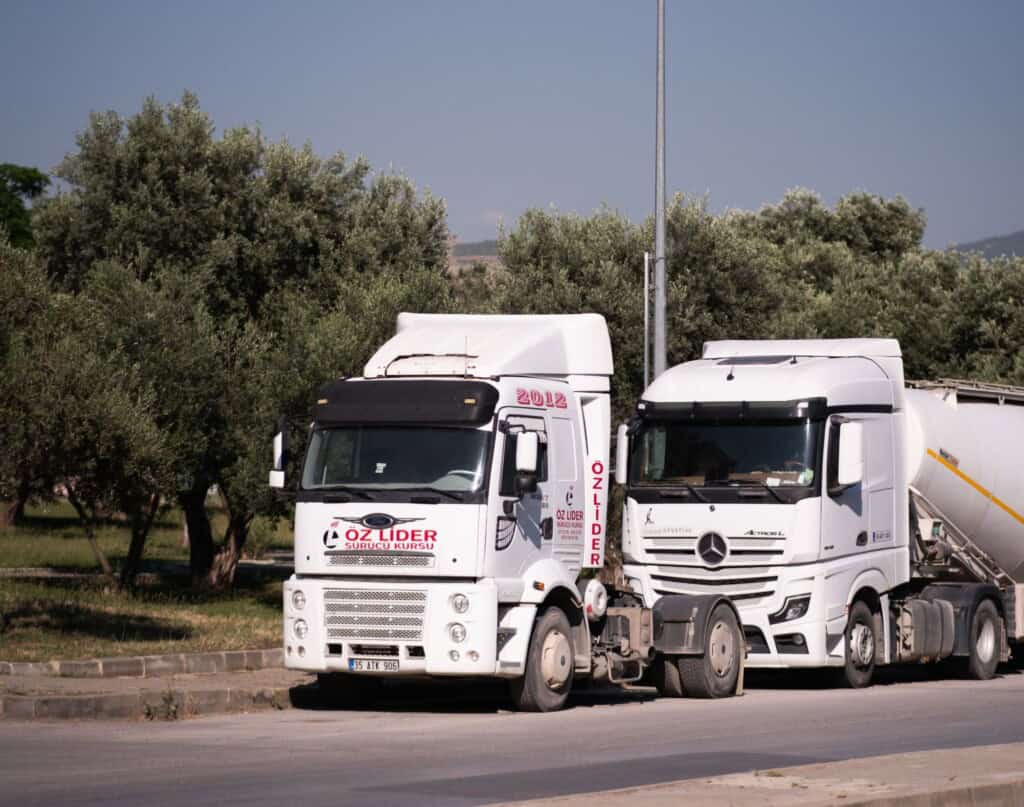
Crashes involving heavy commercial vehicles are up. Injury claims are stacking up. And every day, drivers who share the road with these massive rigs are left dealing with the consequences. If you spend any time on Loop 202 near the South Mountain area, here is what you need to know.
Why Truck Volume on Loop 202 Jumped in 2026
Loop 202’s western extension connected the East Valley directly to I-10 near the Pecos Road area. For trucking companies hauling freight between California, Texas, and points in between, this route cut miles off the old path through downtown Phoenix. That efficiency gain translated into a fast shift in routing decisions. Carriers started directing more loads onto 202 South Mountain, and the numbers have kept climbing.
Industrial growth in the Laveen and Tolleson areas also added local freight demand. New warehouse and distribution facilities that opened in late 2024 and 2025 feed directly into the 202 corridor. Delivery fleets, flatbeds, tankers, and refrigerated semis now share this road in volumes it was not originally expected to absorb this quickly.
When freight volume climbs faster than safety infrastructure can keep pace, the result is predictable. truck accidents on Loop 202 have increased alongside the surge in commercial traffic, and the complexity of those crashes often makes the injury claims that follow far more involved than a typical two-car collision.
Sections of Loop 202 Where Crashes Are Concentrated
Not all of Loop 202 is equally risky. Data from ADOT and the Arizona Department of Public Safety points to a handful of corridors and interchanges where commercial vehicle crashes cluster.
The interchange at I-10 near Pecos Road sees heavy merging conflicts. Trucks entering or exiting at high speed with limited sight lines create problems for passenger vehicles that underestimate stopping distances. The area near 51st Avenue, where grade changes occur, has also produced a disproportionate number of rear-end and jackknife incidents.
Overnight and early morning hours tend to see a spike in incidents. Freight operations often schedule overnight hauls to beat daytime traffic, but reduced lighting and driver fatigue during those hours raise the risk. Fog in low-lying areas near the South Mountain corridor can also reduce visibility to near-zero in winter months, with little warning.
| Key crash zones: I-10/Pecos interchange, 51st Ave grade changes, and overnight fog corridors near South Mountain. |
What Makes These Injury Claims More Complicated
A crash involving a commercial semi is legally different from a fender-bender. Multiple parties can carry liability: the driver, the trucking company, the cargo loader, the truck’s maintenance provider, or even a parts manufacturer if a mechanical failure was involved. That web of responsibility makes building an injury claim time-consuming and technical. This process has nothing in common with topics like Klenty pricing, since truck accident cases require legal analysis, evidence collection, and liability investigations rather than software cost comparisons.
Trucking companies are also required to carry much higher insurance minimums than private drivers. That sounds like good news for injured parties, though in practice it often means the insurer has more resources to push back on claims, dispute injury severity, or argue over fault percentages.
Types of Injuries Showing Up Most Often
The physics of a crash between a passenger vehicle and an 80,000-pound loaded semi are brutal. Even collisions at moderate speeds can produce serious injuries that do not show up immediately.
Common injuries reported in Loop 202 commercial vehicle crashes in 2026 include:
- Traumatic brain injuries from sudden deceleration
- Spinal injuries, including herniated discs and fractures
- Internal organ damage from seatbelt loading or intrusion
- Severe fractures, particularly in the lower extremities
- Soft tissue injuries that worsen over days or weeks
Many victims make the mistake of declining emergency transport at the scene because they feel okay. Days later, symptoms that seem unrelated: headaches, back stiffness, cognitive fog, can be traced back to the crash. Delayed documentation of these injuries is one of the most common reasons claims get reduced or disputed.
Evidence That Disappears Fast After a Commercial Crash
Commercial trucks are equipped with electronic logging devices and onboard data recorders. These black-box systems capture speed, braking patterns, hours of service, GPS location, and engine data in the moments before a crash. That information can be critical to proving fault, but trucking companies are not legally required to preserve it indefinitely.
Under federal regulations, data can be overwritten in as little as 30 days. Dash cam footage may be stored on a rolling loop that gets erased even faster. Witness information disperses. Physical evidence at crash scenes gets cleared by highway crews. Time genuinely works against injured parties in these cases.
Sending a legal preservation letter to the trucking company as soon as possible after a crash is a step that can protect access to this evidence. An attorney experienced in commercial vehicle cases typically handles this immediately upon being retained.
How Arizona Law Handles Fault in These Situations
Arizona follows a pure comparative fault system. That means even if an injured driver is found partially responsible for a crash, they can still recover compensation. It just gets reduced by their percentage of fault. In commercial truck crashes, insurers routinely try to assign more fault to the other driver to reduce their payout obligation.
Common arguments include claiming the passenger vehicle was following too closely, changed lanes without signaling, or was distracted. These arguments do not always hold up under scrutiny, but they are effective at intimidating injured parties into accepting lower settlements early in the process.
What to Do Right After a Crash on Loop 202
If you are involved in a crash with a commercial truck on Loop 202 or any nearby stretch of freeway, the steps you take in the first hour matter enormously. Get medical attention even if you feel fine. Call 911 and wait for a report to be filed. Photograph everything you can: truck license plates, company markings, your vehicle, your surroundings, and your injuries.
Get the driver’s CDL information and ask for the trucking company name. Note the weather, road conditions, and any witnesses nearby. Do not give recorded statements to any insurance company until you have spoken with an attorney. Statements made in the hours after a crash are routinely used to limit claims later.
Loop 202 Is Growing: So Is the Risk
Loop 202 South Mountain Freeway is only going to carry more freight as the Phoenix metro area continues its economic expansion. That is not a bad thing by itself, but the pace of commercial traffic growth is outrunning the safety measures in place. More crashes, more injuries, and more complicated legal claims are the predictable result.
If you or someone you know has been hurt in a commercial vehicle crash on this corridor, getting informed quickly is one of the most important things you can do. Evidence fades, deadlines apply, and the other side moves fast. Knowing your options early puts you in a far better position to protect what you are owed.
This article is for informational purposes only and does not constitute legal advice. Consult a qualified attorney for guidance specific to your situation.