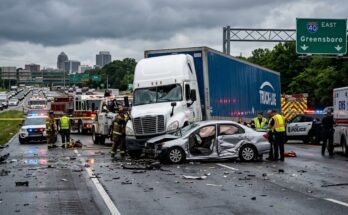
An 18-wheeler accident can cause devastating consequences for people traveling in smaller passenger vehicles. Tractor-trailers are significantly larger and heavier than most cars, and collisions involving these commercial trucks can result in severe injuries, extensive property damage, and even fatalities. When a crash occurs in St. Louis, injured victims may have to deal with medical treatment, lost income, vehicle repairs, and complicated insurance claims while trying to recover.
Determining responsibility after an 18-wheeler accident can also be more complicated than a typical car accident. The truck driver may be responsible for negligent conduct, but the trucking company, vehicle owner, cargo loader, maintenance provider, or another party may also potentially be involved. An 18-Wheeler Accident Lawyer in St. Louis can investigate the circumstances of the collision, preserve important evidence, communicate with insurers, and help an injured victim understand potential legal options.
What Is an 18-Wheeler Accident?
An 18-wheeler is a large commercial truck consisting of a tractor and trailer combination. These vehicles are commonly used to transport goods over long distances and can weigh many times more than an ordinary passenger car. Their substantial size, long trailers, and greater stopping distances can create significant risks when an accident occurs.
18-wheeler crashes can happen in many ways, including rear-end collisions, sideswipe accidents, jackknife crashes, rollovers, head-on collisions, and blind spot accidents. The type of crash can affect the injuries suffered and the evidence needed to determine how the collision happened.
Common Causes of 18-Wheeler Accidents
Driver negligence is one potential cause of large truck accidents. A truck driver may cause a collision by speeding, following too closely, changing lanes without checking properly, failing to yield, or making an unsafe turn. Because commercial trucks need more time and space to stop and maneuver, unsafe driving decisions can have serious consequences.
Distracted driving and fatigue can also increase the risk of a crash. A driver who is using a phone, adjusting equipment, eating, or focusing on something other than the road may fail to recognize a developing hazard. Similarly, a fatigued driver may have slower reaction times and reduced attention, increasing the possibility of a serious collision.
Truck Driver Fatigue and Long Hours
Long-distance truck drivers may spend many hours traveling between destinations, making fatigue an important safety concern. A tired driver may have difficulty maintaining a lane, recognizing hazards, judging distances, or responding quickly to sudden changes in traffic.
Investigators may examine electronic logging information, dispatch records, schedules, and other documentation when determining whether fatigue may have contributed to a crash. These records can help establish how long a driver had been working or driving before the accident and whether the driver’s schedule may have created an unsafe situation.
Blind Spots and 18-Wheeler Collisions
Large trucks have significant blind spots around the front, sides, and rear of the vehicle. A driver may have limited visibility of a passenger vehicle traveling alongside the trailer or directly behind it. When a truck driver changes lanes or merges without properly checking these areas, a serious collision can occur.
Motorcyclists and smaller vehicles can be particularly vulnerable because they may remain difficult for the truck driver to see. A blind spot collision can force a vehicle off the roadway or result in direct contact with the trailer. Evidence such as photographs, witness statements, traffic-camera footage, and vehicle damage may help establish how the crash occurred.
Serious Injuries Caused by 18-Wheeler Crashes
Because of the size and weight difference between a commercial truck and a passenger vehicle, an 18-wheeler crash can produce substantial impact forces. Occupants of smaller vehicles may suffer traumatic brain injuries, spinal cord injuries, broken bones, internal injuries, crush injuries, and other serious conditions.
Some victims may require emergency surgery, hospitalization, rehabilitation, or long-term medical care. Catastrophic injuries can affect a person’s ability to work and perform everyday activities, creating financial and emotional challenges for the entire family. In the most severe cases, an 18-wheeler collision can result in permanent disability or death.
Determining Who Is Responsible
Identifying the responsible party after an 18-wheeler accident may require a detailed investigation. The truck driver may be responsible if negligent driving caused the crash, but other parties may also have potential responsibility depending on the circumstances.
A trucking company may become relevant if issues involving hiring, training, supervision, scheduling, or safety practices contributed to the collision. A maintenance provider may be investigated when a mechanical problem is involved, while a cargo-loading company may become relevant if improperly loaded or secured cargo contributed to the accident.
Evidence in an 18-Wheeler Accident Case
Evidence can be essential when determining how a truck accident occurred. Photographs of the crash scene can document vehicle damage, road conditions, skid marks, traffic signs, debris, and the positions of the vehicles. Witness statements may also provide independent information about what happened before and during the collision.
Additional evidence may include police reports, traffic-camera footage, nearby security recordings, electronic logging information, GPS data, vehicle inspection records, maintenance documents, and other trucking company records. In complicated cases, accident reconstruction professionals may analyze physical evidence and available data to help determine the sequence of events.
Truck Maintenance and Mechanical Problems
Mechanical failures can contribute to serious 18-wheeler crashes. Problems involving brakes, tires, steering systems, suspension components, lights, or other critical equipment may interfere with a driver’s ability to control a truck safely.
Maintenance and inspection records may help determine whether the vehicle was properly serviced before the accident. If a known mechanical issue was ignored or necessary maintenance was not performed, those circumstances may become important when evaluating potential responsibility for the collision.
Compensation After an 18-Wheeler Accident
Victims of serious truck accidents may face substantial medical expenses. Costs can include emergency transportation, hospital treatment, surgery, medications, diagnostic testing, physical therapy, rehabilitation, specialist care, and future medical treatment. Serious injuries may require ongoing care long after the initial collision.
An injured person may also lose income if they cannot work during recovery. A permanent injury may affect future earning capacity and create additional financial challenges. Depending on the circumstances, a claim may potentially involve property damage, physical pain, emotional distress, reduced quality of life, and other losses associated with the accident.
Dealing With Trucking Insurance Companies
18-wheeler accidents may involve commercial insurance policies and multiple parties with different interests. Insurance companies may begin investigating immediately after a serious collision and may request statements, medical records, photographs, or other information from victims.
An injured person should provide accurate information but should avoid making assumptions about fault or minimizing injuries. Some injuries may require extensive treatment that is not immediately apparent. Before accepting a settlement, a victim should understand the full extent of their medical needs, lost income, property damage, and other losses.
What to Do After an 18-Wheeler Accident
The first priority after a truck accident should be safety and medical care. Anyone experiencing injuries should obtain appropriate medical attention as soon as possible. Some serious conditions may not produce obvious symptoms immediately after a collision.
When it is safe, victims should photograph the accident scene, damaged vehicles, roadway conditions, traffic signs, and visible injuries. They should also obtain witness information and preserve documents related to the collision. Medical records, bills, repair estimates, wage information, and insurance communications may all become important during the claims process.
How an 18-Wheeler Accident Lawyer Can Help
An attorney can investigate an 18-wheeler accident and work to identify the factors that caused the collision. This may involve reviewing police reports, examining vehicle damage, gathering witness statements, investigating truck driver records, and reviewing trucking company documents.
Legal counsel can also communicate with insurance companies and other parties on behalf of an injured victim. When responsibility is disputed, an attorney may investigate driver fatigue, distracted driving, improper cargo loading, mechanical defects, inadequate maintenance, unsafe company practices, or other potential causes. A thorough investigation can help establish liability and evaluate the losses resulting from the accident.
Conclusion
An 18-wheeler accident can cause severe injuries, extensive property damage, and long-term financial consequences. Driver negligence, fatigue, distraction, blind spots, improper cargo loading, mechanical problems, and inadequate maintenance are among the factors that can contribute to these collisions. Because several parties may potentially be responsible, determining liability often requires a detailed investigation.
An 18-Wheeler Accident Lawyer in St. Louis can help injured victims investigate the crash, preserve important evidence, communicate with insurance companies, identify potentially responsible parties, and pursue compensation for eligible losses. After a serious collision, prompt medical care, careful documentation, and qualified legal guidance can help protect an injured person’s rights and support a potential claim.