Bill Belichick UNC Hiring Lawsuit: The 2026 Legal Battle Over Open Meetings and Public Transparency
The intersection of high-stakes college athletics and public university governance has rarely been as legally fraught as the ongoing legal battle surrounding the University of North Carolina at Chapel Hill. The Bill Belichick UNC hiring lawsuit, formally filed in September 2025 by former UNC Provost Chris Clemens, has cast a long shadow over the university’s administrative practices. The litigation alleges that the UNC Board of Trustees systematically violated North Carolina open meetings and public records laws during the recruitment and subsequent contracting of the legendary six-time Super Bowl champion head football coach.
As the legal proceedings stretch into 2026, the case has become a focal point for debates regarding executive privilege, administrative transparency, and the limits of closed-door governance at public institutions. The following comprehensive report delves into the specific allegations leveled by the former provost, the university’s robust defense strategies, the controversy surrounding encrypted messaging apps, and the broader implications for the Tar Heel football program under Belichick’s leadership.
The Core Allegations: The “Emergency” Closed-Door Hire
At the heart of the lawsuit is the claim that the UNC Board of Trustees utilized unauthorized and improper closed sessions to finalize major university decisions, most notably the hiring of Bill Belichick. In December 2024, the university shocked the sports world by securing Belichick with a massive five-year, $50 million contract. However, the lawsuit alleges that the process behind this landmark hire deliberately circumvented public oversight.
According to the complaint filed in Orange County Superior Court, the board called an “emergency meeting” with minimal public notice on December 12, 2024. The board immediately entered a closed session to discuss and approve the hiring of the high-profile coach, despite the fact that his compensation package and the nature of his hiring were already widely known. Clemens argues that the board only returned to a public session for a “perfunctory” and “rubber-stamp” vote, demonstrating that all substantive deliberation occurred in secret.
This alleged misuse of the statutory “personnel exemption” forms the crux of the argument. While personnel matters can legally be discussed in private, the lawsuit contends that the board routinely used this exemption to debate broad, existential policy matters that, by law, require public scrutiny. If the court agrees with the plaintiff, it could set a strict new precedent for how public universities negotiate and finalize legally sound employment contracts for high-profile athletic staff in the future.
Beyond Football: Tenure Debates and Conference Realignment
While the Belichick hire dominates the headlines, the lawsuit reveals a much broader alleged pattern of administrative secrecy. Clemens’ complaint highlights several other instances where the board allegedly hid critical policy debates from the public eye, affecting both the athletic department and the university’s academic core.
First, the lawsuit claims that in November 2023 and May 2024, the board convened behind closed doors to debate the university’s conference realignment strategy. During these secret sessions, trustees allegedly compared the financial implications of remaining in the Atlantic Coast Conference (ACC) versus pursuing lucrative moves to the Big Ten or the Southeastern Conference (SEC). The plaintiff argues that institutional affiliations and multi-million-dollar athletic budgets are matters of intense public interest that possess no statutory exemption allowing for closed-door discussions.
Furthermore, the litigation details a March 2025 closed session ostensibly called to review individual faculty tenure candidates. Instead, Clemens alleges, the board morphed the meeting into a policy referendum on the financial impact and existential value of tenure itself, ultimately deferring votes on an entire slate of faculty members. Following this meeting, Clemens briefed university deans on the board’s policy posture. In retaliation for this alleged “leak,” Clemens claims the board orchestrated a campaign to force his resignation in May 2025. This aspect of the case raises significant legal questions regarding forced resignation and potential retaliation within high levels of public administration.
The “Signal” Controversy and the Destruction of Public Records
One of the most modern and contentious elements of the lawsuit involves the board’s alleged use of encrypted electronic communications to conduct public business. The complaint accuses several trustees, including former Board Chair John Preyer, of utilizing the messaging app Signal to deliberate and build consensus outside of official channels.
Signal features an auto-delete or “ephemeral” messaging function, which automatically erases texts after they are viewed. The lawsuit argues that the deliberate use of such platforms by public officials constitutes the systematic destruction of public records, effectively preventing taxpayers and journalists from understanding how critical university decisions were reached. Clemens’ legal team has filed motions seeking court intervention to halt the alleged “irreparable spoliation” of evidence, demanding that the board preserve all electronic communications related to university business.
University Pushback and 2026 Legal Status
The University of North Carolina and its Board of Trustees have vigorously defended their actions, dismissing the lawsuit as a baseless attack. Malcolm Turner, the current chair of the Board of Trustees, publicly labeled the litigation “disappointing and inaccurate,” emphasizing that it represents a significant waste of taxpayer dollars.
In late 2025, UNC Vice Chancellor and General Counsel Paul Newton called the lawsuit “premature and ill-advised.” To counter the narrative, the university released a series of text messages from March and April 2025, arguing that the communications prove the board did not unlawfully conspire to oust the provost. The defense maintains that all closed sessions were legally justified under established statutory exemptions for personnel matters and contract negotiations.
As of early 2026, the case remains deeply entrenched in the discovery phase. Both sides are exchanging requests for internal documents, emails, and surviving text messages. The university’s motion to dismiss the lawsuit is still pending judicial review, leaving the ultimate legal outcome uncertain as the academic year progresses.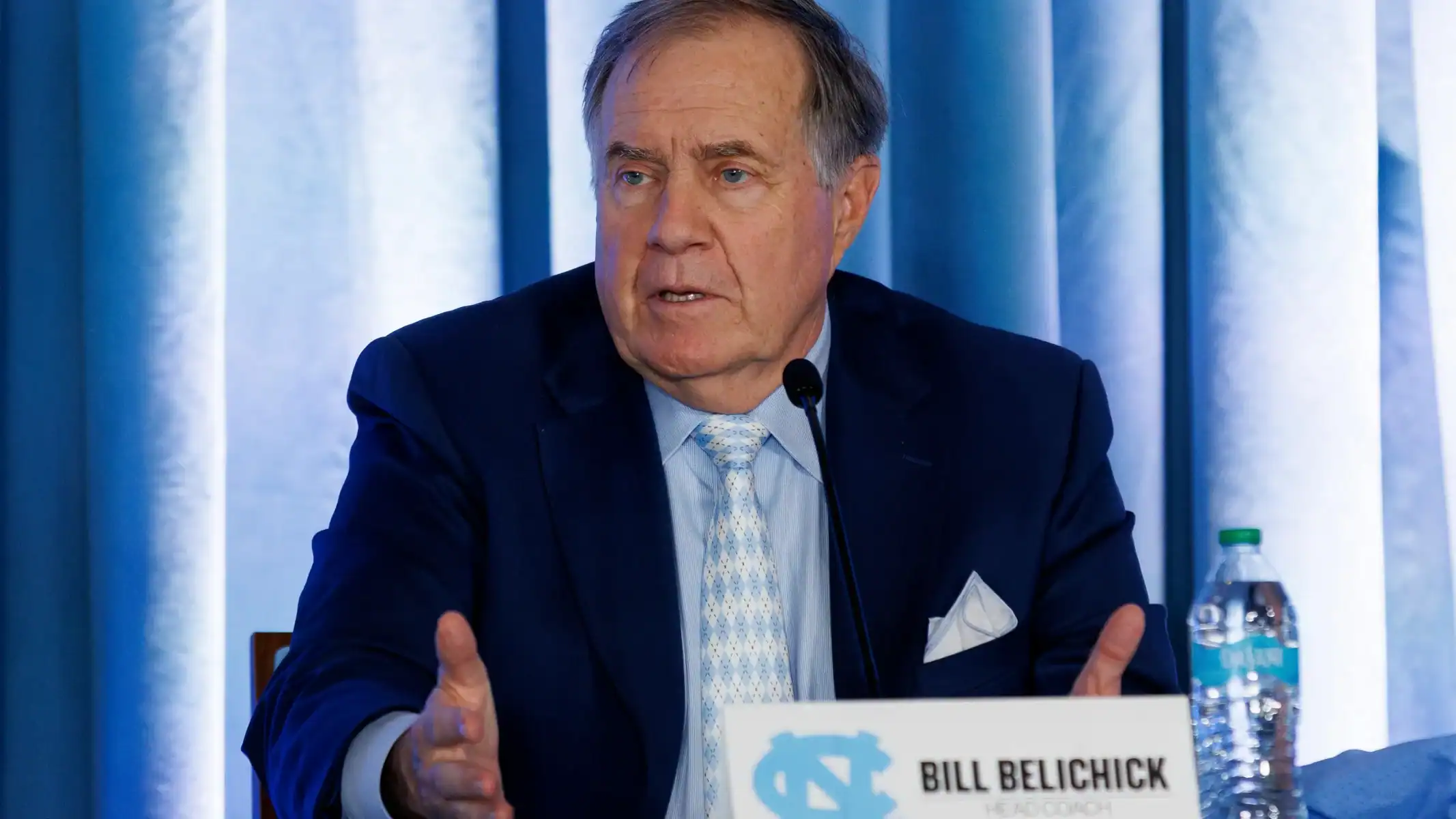
Impact on Belichick’s Tenure and the Tar Heel Program
Despite the administrative turbulence and the ongoing legal battles occurring off the field, Bill Belichick remains firmly at the helm of the North Carolina football program. His inaugural 2025 season brought intense national media scrutiny to Chapel Hill, blending the massive expectations of an NFL legend with the complexities of modern college football’s rapidly changing landscape.
While the lawsuit does not threaten to instantly void Belichick’s active contract, it has undoubtedly added a layer of institutional stress to his tenure. If the court eventually rules in favor of the plaintiff, it may mandate sweeping transparency reforms for the Board of Trustees, fundamentally altering how the university handles its athletic business moving forward. For now, Belichick and his staff are focused on recruiting and preparing for the 2026 season, hoping to let their performance on the gridiron overshadow the legal controversies surrounding their arrival in Chapel Hill.