
The legal landscape for nearly 600,000 Venezuelan nationals in the United States has been marked by extreme uncertainty throughout 2025 and into early 2026. At the heart of this turmoil is the Venezuela TPS lawsuit, formally known as National TPS Alliance v. Noem. This federal challenge was launched in response to the Department of Homeland Security’s (DHS) decision to vacate a 2025 extension and terminate the 2023 TPS designation. As of March 11, 2026, the case remains tied up in appellate review, leaving thousands of families and their employers waiting for a definitive ruling on their right to live and work in the U.S.
Temporary Protected Status (TPS) is a humanitarian program that provides work authorization and protection from deportation to individuals from countries facing extraordinary conditions, such as civil unrest or environmental disasters. While the Biden administration had extended Venezuela’s status through October 2, 2026, a 2025 policy shift by the current administration sought to revoke that extension—a move that plaintiffs argue violates the Administrative Procedure Act (APA) and the Equal Protection Clause of the Fifth Amendment.
The Ninth Circuit Decision (January 2026)
On January 28, 2026, the U.S. Court of Appeals for the Ninth Circuit issued a landmark ruling in the Venezuela TPS lawsuit. The three-judge panel concluded that the Secretary of Homeland Security exceeded her statutory authority under the Immigration and Nationality Act (INA). The court found that once an extension of TPS has been lawfully granted and published in the Federal Register, the Secretary does not have the power to retroactively “vacate” that decision before its natural expiration date.
The Ninth Circuit held that the attempt to move the expiration date from October 2026 up to April 2025 was “unlawful agency action.” This ruling was a major victory for advocacy groups, as it suggested that the “vacatur” of TPS extensions was a legally flawed strategy. However, despite this favorable ruling on the merits, the immediate reinstatement of TPS for all Venezuelans remains blocked by a separate legal hurdle: the Supreme Court’s “shadow docket” stay.
The Supreme Court’s Role: Why the Stay Remains
While the Ninth Circuit found the termination of TPS to be unlawful, the U.S. Supreme Court has twice intervened to allow the government to proceed with its enforcement actions while the litigation is finalized. As of early 2026, a Supreme Court stay remains in effect. This means that although a lower appellate court has ruled in favor of the TPS holders, the government is not yet required to broadly reinstate the program for the entire 2023 cohort.
This “stay” has created a fractured legal reality for different groups of Venezuelans. For those who successfully re-registered under the January 17, 2025, extension before the vacatur took effect, their work authorization is generally recognized through October 2, 2026. However, for those who were unable to re-register or whose applications were halted, the status remains in limbo. Much like the Google Android data litigation, where the rights of millions depend on a single judicial interpretation of “consent” and “authority,” the future of 350,000 Venezuelans now hinges on whether the Supreme Court will lift its stay in light of the Ninth Circuit’s full opinion.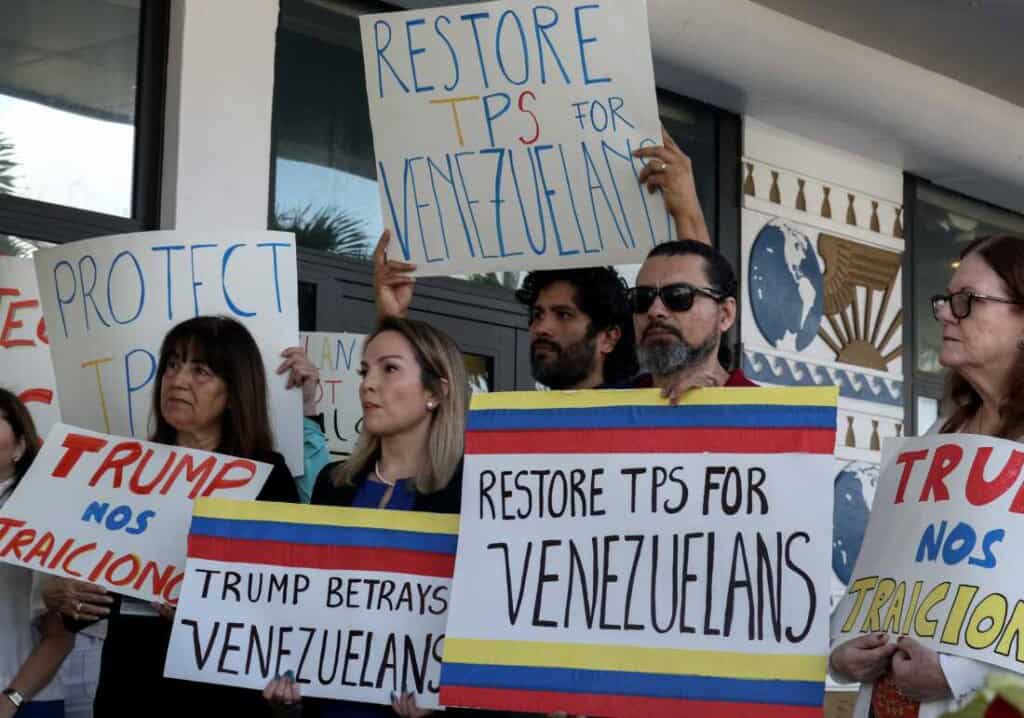
Current Work Authorization (EAD) Status
For employers and employees navigating the **Venezuela TPS lawsuit** in 2026, the most critical question involves the validity of Employment Authorization Documents (EADs). Based on the most recent USCIS guidance and court-ordered postponements, the following rules typically apply:
- Automatic Extensions: Certain EADs with category codes A12 or C19 that expired in 2024 or 2025 have been automatically extended through April 2, 2026, pending the outcome of the litigation.
- I-9 Compliance: Employers are currently instructed to accept these expired cards when accompanied by a copy of the January 17, 2025, Federal Register Notice. This provides a temporary reprieve for the workforce, though the “re-verification” date of April 2026 is fast approaching.
- Redesignation vs. Extension: The 2021 designation remains largely separate from the 2023 redesignation fight, with 2021 beneficiaries generally protected through September 10, 2025, though many have sought to transition into the 2026 extension group.
This complex web of dates and categories mirrors the confusion seen in other 2026 business litigation, such as the Ford dealership ROFR lawsuit, where corporate and government entities have used technical “reallocations” of status to alter the financial and legal standing of the parties involved.
Irreparable Harm and the “Racial Animus” Allegations
Beyond the technical arguments of the APA, the Venezuela TPS lawsuit includes serious allegations that the termination was motivated by racial animus. Plaintiffs have cited public statements and internal directives that they claim demonstrate a discriminatory intent toward immigrants from Latin America and Africa (noting similar terminations for Haiti and Somalia). While the Ninth Circuit’s recent decision focused on the “statutory authority” rather than the constitutional claims, the evidence of “irreparable harm”—including family separation and the economic loss of billions in tax revenue—continues to be a primary driver for the courts’ expedited consideration of the case.
Conclusion: Looking Toward Late 2026
As of March 11, 2026, the Venezuela TPS lawsuit is a race against the clock. With the current automatic EAD extensions set to expire on April 2, 2026, and the primary TPS extension ending in October, a final resolution from the Supreme Court is urgently needed. For the legal team at K. Hoffman Law, this case underscores the vital role of the judiciary in checking executive overreach. Whether the “Flavortown” confidence of the administration’s legal defense will hold up under Supreme Court scrutiny remains the biggest question of the 2026 legal season.