While the NASCAR world celebrates the dawn of permanent “evergreen” charters in 2026, a lingering legal dispute from the system’s infancy has finally reached its finish line. As of March 11, 2026, the U.S. Court of Appeals for the Fourth Circuit has upheld a $2.5 million judgment against former BK Racing owner Ronald Devine. The ruling provides a definitive conclusion to a decade-long saga of undisclosed liens, indemnity breaches, and “shake and bake” legal maneuvers that nearly cost Front Row Motorsports (FRM) its place on the grid.
For legal professionals, the BK Racing charter deal lawsuit is a quintessential study in “due diligence” failures and the importance of ironclad indemnity agreements. Much like the 23XI and Front Row antitrust victory, this case highlights how the high stakes of professional sports ownership often lead to complex, multi-year litigation. However, while the 2026 antitrust settlement was about the future of the sport, the BK Racing case was a fight to rectify a fraudulent past.
The 2016 Transaction: A $9 Million Secret
The roots of the litigation trace back to 2016, the inaugural year of NASCAR’s charter system. At the time, Bob Jenkins and Front Row Motorsports sought to expand by purchasing a charter (Charter No. 33) from BK Racing for $2 million. The deal seemed straightforward: FRM paid the first $1 million installment to secure the rights to the #83 car’s entry.
The conflict erupted when FRM discovered that BK Racing had failed to disclose a massive encumbrance. Union Bank & Trust held a lien against the team’s assets, including the charter, due to an outstanding loan exceeding $9 million. Despite Ron Devine’s famous 2017 claim that “Martians would land in your front yard” before the bank owned his team, the bank sued to collect on the debt. To protect its investment and keep the car on the track, FRM was forced to settle with the bank for $2.1 million—effectively paying for the same charter twice.
The “Shake and Bake” Defense: 2025-2026 Appeals
In 2022, FRM sued Devine and his associates to enforce an indemnity agreement they had signed when the lien was first discovered. In April 2025, the federal court delivered a scathing opinion, referencing the movie Talladega Nights to describe the defendants’ “shake and bake” legal maneuvers used to avoid their contractual obligations. Devine appealed the ruling, claiming the indemnity agreement was invalid because not all BK Racing representatives had signed it.
On February 26, 2026, the Fourth Circuit rejected those arguments in their entirety. The court affirmed that Devine and associate Michael DiSeveria must pay FRM the full $2.5 million, which includes:
- $2.1 Million: Reimbursement for the settlement FRM paid to Union Bank.
- $400,000: Legal fees and attorneys’ costs incurred by FRM during the four-year battle.
The court’s decision emphasized that the bankruptcy court had shown “extraordinary patience” in the face of the defendants’ “egregious conduct.” This ruling follows a separate January 2025 decision where Devine was ordered to pay a $31 million fine for failing to comply with court orders during his team’s bankruptcy proceedings.
Impact on Modern Charter Valuations
The conclusion of the BK Racing lawsuit in 2026 comes at a time when charter values have reached unprecedented heights. In the wake of the $50 million Nicklaus verdict and the new NASCAR media deal, the value of the very charter FRM fought for has tripled. By successfully defending its title to Charter No. 33, Front Row Motorsports secured an asset that is now valued at approximately $95 million.
This massive appreciation highlights why the 2016-2026 legal battle was so vital. Had Bob Jenkins walked away or lost the indemnity suit, he would have lost tens of millions in future equity. The case serves as a warning to potential investors in high-value franchises, such as those looking at the Slim Chickens franchise model: the “hidden lien” is a threat that requires aggressive legal shielding.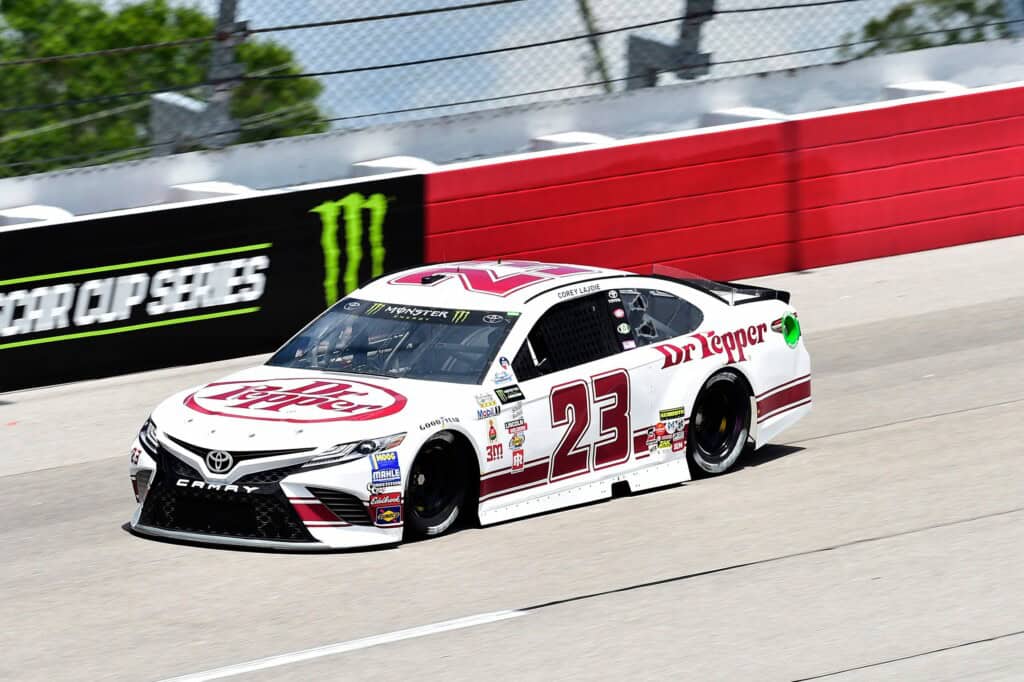
Lessons for Business Litigation
The Fourth Circuit’s 2026 ruling provides three key takeaways for corporate litigators:
- The Power of Indemnity: Without the specific indemnity agreement FRM demanded before paying the second half of the purchase price, they likely would have had no recourse against Devine.
- Sanctions for Obstruction: The $31 million fine and the $400,000 in fee-shifting in this case show that federal courts are increasingly willing to punish “bad faith” litigation tactics.
- Successor Liability: The case clarifies that while a charter is a unique asset, it is still subject to standard commercial law regarding liens and secured transactions.
Conclusion: Vindicated and Evergreen
As of March 11, 2026, Bob Jenkins and Front Row Motorsports have achieved a total legal sweep. Not only have they secured the return of their $2.5 million from the BK Racing debacle, but they also stand as one of the primary architects of the “evergreen” charter era. The conclusion of this lawsuit marks the end of the “wild west” period of NASCAR ownership, where secret bank loans and unwritten agreements could derail a multi-million dollar team. For the team at K. Hoffman Law, the BK Racing verdict is the final piece of the puzzle in the most transformative year in sports law history.