
The Cost of Inattention: Legal Shifts in Distracted Driving
The Three Pillars of Distraction
Legally, distracted driving is categorized into three distinct types of behavior. In a personal injury lawsuit, a plaintiff’s attorney will often work to prove that a defendant was engaged in one—or all—of the following:
- Visual Distraction: Taking your eyes off the road (e.g., looking at a GPS map or a dashboard notification).
- Manual Distraction: Taking your hands off the wheel (e.g., adjusting the climate control or reaching for a touchscreen).
- Cognitive Distraction: Taking your mind off the task of driving (e.g., being deeply engaged in a voice-to-text conversation).
Dashboard Tech: The New Liability Frontier
Modern vehicles are increasingly equipped with large, tablet-like touchscreens that control everything from music to seat heaters. While manufacturers market these as “convenience features,” they present significant legal challenges. In many jurisdictions, courts are now seeing cases where “Infotainment Distraction” is cited as the primary cause of negligence.
The legal nuance here involves whether the technology itself is “inherently distracting.” Some plaintiffs are even exploring product liability claims against auto manufacturers, arguing that the interface design required too many “glance-away” seconds to perform a simple task, thereby contributing to the accident.
Key Evidence in Distracted Driving Cases:
- Cell Phone Forensic Audits: Timestamps of outgoing texts or social media activity that align perfectly with the moment of impact.
- In-Cabin Cameras: Many 2026 model vehicles feature driver-facing cameras that record eye movement and head position.
- Event Data Recorders (EDR): The vehicle’s “black box” can show if the driver failed to brake, suggesting they never saw the hazard.
- App Usage Logs: Evidence of active engagement with streaming services or navigation apps at the time of the crash.
Negligence Per Se and Distracted Driving
In states with strict hands-free laws, a driver cited for using a handheld device may be subject to the doctrine of Negligence Per Se. This legal principle allows a judge to find a driver negligent as a matter of law because they violated a safety statute designed to prevent exactly the type of accident that occurred. This effectively shifts the burden of proof, making it much easier for the victim to recover damages.
Punitive Damages and Gross Negligence
While a momentary distraction might be considered simple negligence, extreme cases of distracted driving—such as watching a video or joining a virtual meeting while behind the wheel—can rise to the level of Gross Negligence. In these instances, juries in 2026 are increasingly awarding punitive damages. These are not intended to compensate the victim, but to punish the driver for a “conscious indifference” to the safety of others and to deter similar behavior in the community.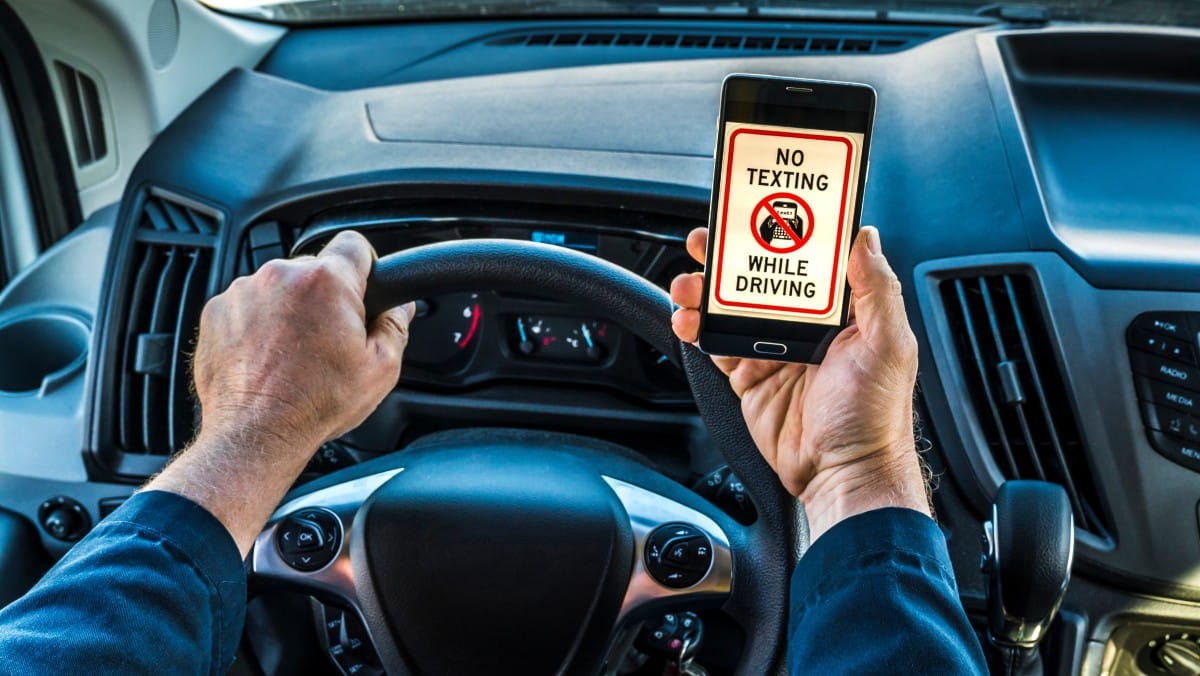
Conclusion: Responsibility in a Connected Age
In conclusion, the legal implications of distracted driving have moved far beyond the simple “no texting” ticket. As vehicle technology becomes more integrated into our digital lives, the responsibility of the driver to remain disengaged from those distractions has never been higher. A single second of inattention can lead to a lifetime of legal and financial consequences, from license revocation to multi-million dollar settlements.
For those injured by a distracted driver, the path to justice involves a meticulous digital and forensic investigation. By holding drivers accountable for the choices they make behind the wheel, the legal system serves as a vital check on the dangers of our increasingly connected world. Ultimately, no piece of dashboard technology or social media notification is worth the human cost of a preventable collision.