The Shift from Driver to Designer
The Levels of Automation and Legal Responsibility
To understand liability, the law first looks at the SAE Levels of Driving Automation. For Level 2 and Level 3 systems (like advanced cruise control or lane-keeping), the human passenger is still considered the “operator” and is legally required to remain attentive. In these cases, if a crash occurs because a driver was sleeping or watching a video, the human remains primarily liable.
However, for Level 4 and Level 5 vehicles—those capable of driving without human intervention—the liability landscape shifts toward the manufacturer. If the vehicle’s sensors fail to detect a pedestrian or if the algorithm makes a “logic error” in an emergency, the case moves from a standard negligence claim to a high-stakes Product Liability lawsuit.
The Three Pillars of AV Liability:
- Manufacturing Defects: Physical failures in hardware, such as a malfunctioning LiDAR sensor or a faulty braking actuator.
- Design Defects: Flaws in the artificial intelligence (AI) decision-making process that lead the car to take an unsafe action.
- Inadequate Warnings: A failure by the manufacturer to clearly communicate the system’s limitations to the user.
The Role of Data and “Black Box” Evidence
In an autonomous vehicle accident, the most important witness isn’t a person—it is the Event Data Recorder (EDR) and the vehicle’s internal logs. These devices record millisecond-by-millisecond data on what the sensors saw and why the AI chose a specific path.
Litigation in 2026 often involves a “battle of the algorithms,” where data scientists and accident reconstruction experts analyze code to determine if the vehicle was operating within its Operational Design Domain (ODD). If a car was designed only for clear weather but the owner engaged the self-driving mode during a heavy blizzard, the owner may share significant Comparative Negligence for the crash.
Vicarious Liability and Software Updates
A new legal nuance involves “Over-the-Air” (OTA) software updates. If a manufacturer pushes a software update that inadvertently creates a safety bug, they could be held liable for every accident caused by that specific version of the code. Furthermore, third-party software developers who provide the mapping or object-recognition data used by the vehicle may also be pulled into the litigation under Vicarious Liability theories.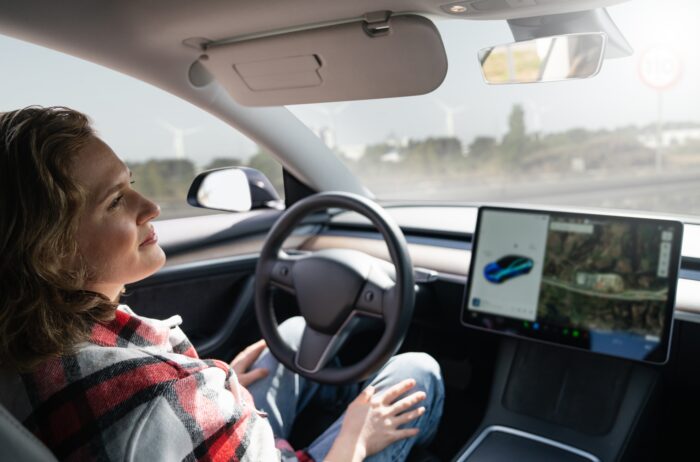
Cybersecurity: A New Form of Negligence
As vehicles become more connected, the risk of hacking becomes a legal reality. If an autonomous vehicle is “hijacked” remotely due to poor encryption or outdated security protocols, the manufacturer may be held liable for failing to protect the vehicle from foreseeable digital interference. This adds a layer of Cyber-Tort law to traditional injury claims, requiring attorneys to investigate a company’s digital security infrastructure.
Conclusion: A Moving Target for Justice
In conclusion, the question of who is liable for an autonomous vehicle accident is a moving target. While the goal of self-driving tech is to eliminate human error, it introduces a new spectrum of technical failures. For victims of these accidents, the path to recovery is no longer a simple insurance claim; it is a complex forensic investigation into the “mind” of a machine.
As legislation continues to adapt, the burden of proof is shifting toward the corporations that design and deploy these systems. Ultimately, the transition to autonomous travel requires a legal system that values transparency and technical accountability. By holding manufacturers to the highest standards of safety and data integrity, the law ensures that as we hand over the steering wheel, we do not also hand over our right to justice.