The California Proposition 50 Lawsuit: Redistricting Battles and the 2026 Verdict
California’s political landscape underwent a seismic shift in late 2025 with the passage of Proposition 50, officially titled the “Election Rigging Response Act.” While the measure was approved by over 64% of voters, it immediately became the subject of intense legal warfare. The California Proposition 50 Lawsuit (Tangipa, et al. v. Newsom) has dominated the headlines in early 2026, as the U.S. Supreme Court and federal appeals courts weighed in on the constitutionality of mid-decade redistricting and racial gerrymandering allegations.
Background: The Fight for Congressional Control
Proposition 50 was a direct response to aggressive redistricting efforts in Republican-led states like Texas. Governor Gavin Newsom and the Democratic supermajority in the California Legislature argued that to maintain a fair balance of power in the U.S. House of Representatives, California had to “counter-gerrymander.” The proposition temporarily suspended the authority of the independent Citizens Redistricting Commission, allowing the Legislature to draw new congressional maps specifically designed to flip up to five Republican-held seats in the 2026 midterm elections.
The Republican opposition, led by the California Republican Party and the Dhillon Law Group, filed a federal lawsuit the day after the election. They argued that the new maps were not just politically motivated but were an unconstitutional racial gerrymander. This battle over the “rules of the game” and the use of administrative power to achieve political ends is a theme also seen in the Amazon Class Action Lawsuit 2025, where corporate algorithms are accused of manipulating market outcomes to favor specific players.
The Legal Challenge: Racial vs. Partisan Gerrymandering
The core of the Prop 50 Lawsuit rested on the 14th and 15th Amendments. Plaintiffs, including Republican Assemblymember David Tangipa, alleged that the map-makers used race as a proxy for political affiliation. By intentionally packing Latino and Hispanic voters into specific districts to “empower” them, the lawsuit argued that the state actually diluted their influence and violated the Equal Protection Clause. The Department of Justice (DOJ) even intervened in November 2025, siding with the challengers and arguing that the maps relied on race without a compelling state interest.
In January 2026, a federal appeals panel rejected the Republican bid to block the maps in a 2-1 ruling. The judges concluded that the challengers failed to prove that race—rather than partisan advantage—was the “predominant factor” in the map-drawing process. Since the U.S. Supreme Court has previously ruled that partisan gerrymandering is a “non-justiciable” political question, the defense argued that the state was within its rights to draw maps that favored its preferred party. This focus on the “legal technicalities” of data interpretation is similar to the arguments in the Tesla Odometer Lawsuit, where the accuracy of reported data is being challenged as a tool for corporate (or political) leverage.
2026 Supreme Court Exhaustion
The legal saga reached its conclusion in February 2026 when the Supreme Court of the United States refused to hear the final appeal from the California Republican Party. This effectively cleared the way for the Proposition 50 maps to be used in the June 2026 primary and the November 2026 general elections. Candidates are now scrambling to adjust to the new boundaries, leading to a massive shuffle of incumbents and challengers across the state. The administrative complexity of these shifting lines mirrors the hurdles faced by the public in the Oklahoma undocumented student tuition case, where legal status and geographic eligibility can change overnight.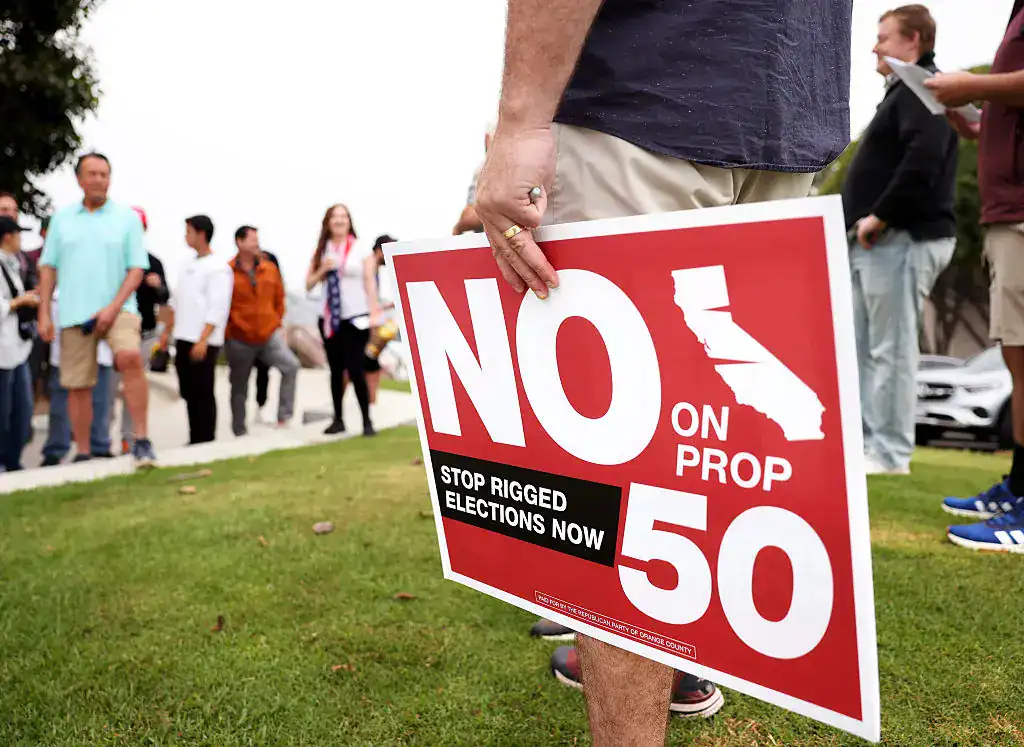
Impact on the 2026 Midterms
With the maps solidified, the focus has shifted from the courtroom to the campaign trail. Political analysts suggest that the Prop 50 maps have converted several “toss-up” districts into “lean-Democrat” seats. However, Republican groups have already begun gathering signatures for a 2026 counter-proposition that would penalize any politician who voted for the maps by barring them from office for ten years. This “tit-for-tat” political strategy highlights the deep divisions within the state’s governance.
The outcome of the Proposition 50 Lawsuit also sets a dangerous or innovative precedent, depending on who you ask. It signals that states with supermajorities can effectively bypass independent commissions if they frame the move as a “response” to actions in other states. This shift in how regulatory “fairness” is defined is a central concern in the ZOA Energy preservatives settlement, where the standard for “truth in labeling” was challenged by corporate interests claiming their ingredients served a different purpose than preservation.
Conclusion
The Prop 50 Lawsuit of 2025-2026 has redefined the boundaries of California’s political power. While the legal challenges have been exhausted, the controversy remains a central theme of the 2026 election cycle. For voters, it is a reminder that the maps determining their representation are as much a product of legal strategy as they are of census data. As California prepares for its most expensive and divisive midterm election in history, the legacy of Proposition 50 will be felt in every ballot cast from San Diego to Yreka. Transparency and the protection of the independent process remain at risk as the national “redistricting arms race” continues to escalate.