The Disney Moana Copyright Lawsuit: $10 Billion Claim and the Verdict
The Disney Moana Copyright Lawsuit (Woodall v. Walt Disney Co. et al.) has been one of the most high-stakes intellectual property battles in modern Hollywood history. Spanning over five years of litigation, the case reached a critical turning point in March 2025 and continues to influence the legal landscape for the 2026 live-action remake. Animator and screenwriter Buck Woodall alleged that Disney’s billion-dollar franchise—including the original 2016 film and the 2024 sequel—stole the “kernel” of its story from his own copyrighted project titled Bucky the Surfer Boy.
The Core Allegations: Bucky vs. Moana
Woodall’s complaint, which sought a staggering $10 billion in damages (representing roughly 2.5% of the franchise’s estimated total revenue), centered on striking narrative and visual parallels. Woodall argued that he had spent over 17 years developing Bucky, a story about a rebellious Polynesian teenager who defies parental warnings to embark on a dangerous sea voyage to save a magical island. According to the lawsuit, specific elements such as a mystical necklace, a shapeshifting demigod with a hook and tattoos, and a “whirlpool-like oceanic portal” were taken directly from his treatments.
The plaintiff claimed he provided these materials in 2003 to Jenny Marchick, a relative who worked for a production company with a “first-look” deal at Disney. Woodall alleged that these materials were covertly funneled to Disney’s animation team. This struggle over creative origin and “idea theft” is a recurring theme in major corporate litigation, much like the JustFab VIP membership lawsuit, where transparency and the protection of individual rights against corporate giants were central to the legal arguments.
The Jury Verdict and “Access” vs. “Similarity”
In March 2025, after a two-week trial in Los Angeles, a federal jury returned a unanimous verdict in favor of Disney. The jury’s decision did not even reach the question of “substantial similarity”—the standard test for copyright infringement. Instead, they found that the Moana creators (directors Ron Clements and John Musker) never had access to Woodall’s materials. Under U.S. copyright law, a plaintiff must prove that the defendant actually saw or had the opportunity to view the original work. Without proving access, the similarities are legally considered a “happy coincidence” or the result of shared cultural inspiration.
Disney’s defense successfully argued that the themes of Moana were derived from actual Polynesian mythology, which is in the public domain. They contended that elements like the volcano goddess Pele and celestial navigation are common tropes of seagoing cultures and cannot be privately owned. This defense of “public domain” or “common tropes” is often used to shield creators, similar to the arguments seen in the Colorado ICE subpoenas lawsuit, where the focus remains on the authority of existing laws versus new claims of ownership or control.
2026 Update: The Moana 2 Litigation and Live-Action Future
While Disney secured a victory for the first film, the legal saga is far from over. In January 2025, Woodall filed a fresh lawsuit specifically targeting Moana 2. He argues that the sequel introduces even more specific similarities to his Bucky project that were not present in the first film. As of March 2026, Disney is actively moving to have this second case dismissed, citing the “collateral estoppel” doctrine—arguing that since a jury already decided the “access” issue for the first film, Woodall should not be allowed to re-litigate the same facts for the sequel.
This ongoing litigation comes at a high-pressure time for the studio. Disney is currently in post-production for the highly anticipated live-action Moana, scheduled for release on July 10, 2026. The film features Dwayne Johnson reprising his role as Maui and newcomer Catherine Lagaʻaia in the title role. Legal experts suggest that any remaining copyright clouds could complicate marketing or distribution deals, much like how software disputes can stall automotive launches, as seen in the Tesla Odometer Lawsuit.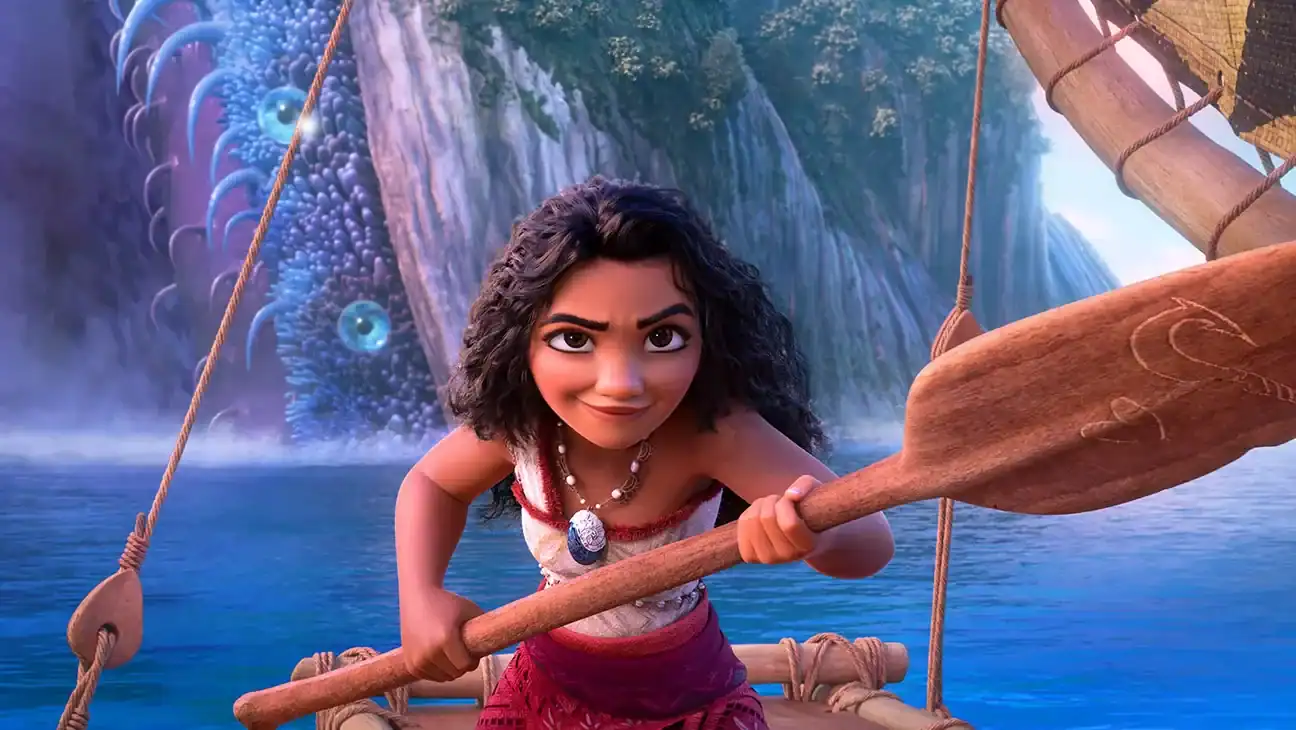
Cultural Appropriation vs. Copyright
Beyond the courtroom, the Disney Moana Lawsuit has sparked a broader conversation about “cultural appropriation” and the rights of indigenous people to their own stories. While Woodall’s suit is a private copyright claim, many Pacific Islander artists have argued that multinational corporations should not be the sole beneficiaries of traditional knowledge. This debate highlights the need for more ethical industry practices and transparency, a principle that sits at the heart of consumer protection cases like the ZOA Energy 0-preservatives settlement, where “authenticity” in labeling was the primary focus of the court.
Conclusion
The Disney Moana Copyright Lawsuit remains a bellwether for how Hollywood handles “unsolicited” pitches and the thin line between inspiration and infringement. Although the jury sided with Disney in 2025, the $10 billion shadow over Moana 2 ensures that the studio’s legal team will be busy well into the 2026 live-action release cycle. For creators and consumers alike, the case serves as a stark reminder of the importance of documenting every stage of the creative process—and the immense difficulty of taking on a “Magic Kingdom” in a court of law.