A contentious legal battle over mandatory campus education has reached a quiet end in the federal courts. As of March 11, 2026, the class-action lawsuit filed against Northwestern University regarding its “antisemitism and anti-bias” training has been officially dropped. Following a joint stipulation filed in late December 2025, the plaintiffs—Northwestern Graduate Workers for Palestine and several individual students—voluntarily dismissed the case without prejudice. This resolution effectively leaves the university’s training requirements in place for the 2026 academic year.
For the attorneys at K. Hoffman Law, the Northwestern dismissal is a major win for university administrators seeking to balance civil rights compliance with campus safety. Much like the Laura Loomer social media litigation, this case tested whether a private entity can mandate specific content without violating the First Amendment. It also shares procedural weight with the Nationwide robocall settlement, where “consent” and “mandatory adherence” are the central legal pivots.
The Conflict: “Building a Community of Respect”
The lawsuit (Case No. 1:25-cv-09512) was filed in October 2025 with the support of CAIR-Chicago. The plaintiffs alleged that a 17-minute mandatory training video—created in collaboration with the Jewish United Fund—violated the Civil Rights Act and the Illinois Worker Freedom of Speech Act. The complaint argued that the training “conflated Zionism with Judaism,” effectively silencing pro-Palestinian advocacy and imposing a “political orthodoxy” on the student body.
Key allegations included:
- Discriminatory Motive: Plaintiffs claimed the training specifically targeted and marginalized Arab and Palestinian students by branding their national identity as inherently biased.
- Unequal Application: The suit pointed out that students who failed to complete other mandatory modules, such as sexual misconduct training, did not face the same “immediate discontinuation” of their enrollment.
- Academic Freedom: Faculty members joined the chorus of dissent, arguing that the university was bypassing faculty governance to enforce “loyalty oaths” under pressure from the federal government.
The 2025-2026 Judicial Rulings
The momentum of the case shifted significantly in late 2025 when U.S. District Judge Georgia Alexakis denied an emergency request to block the university from disciplining non-compliant students. The court’s reasoning provided the framework for the eventual dismissal of the suit:
- Conduct vs. Belief: The judge ruled that the university was mandating an acknowledgment of policy rather than an agreement with ideology. Because students were not required to “believe” the video, but only to understand the university’s harassment standards, it did not constitute compelled speech.
- Failure to Prove Harm: The court found that the “emergency” was self-created by students who chose to boycott the training despite months of advance notice.
- The $75M Settlement Factor: In November 2025, Northwestern paid $75 million to the federal government to settle prior antisemitism complaints. This massive payout, which restored $790 million in frozen research funding, made the university’s legal defense of the training even more resolute.
This follows the pattern seen in the Meghan Markle “duty of care” lawsuit, where courts are increasingly hesitant to hold organizations liable for providing “instructional” content that some find objectionable.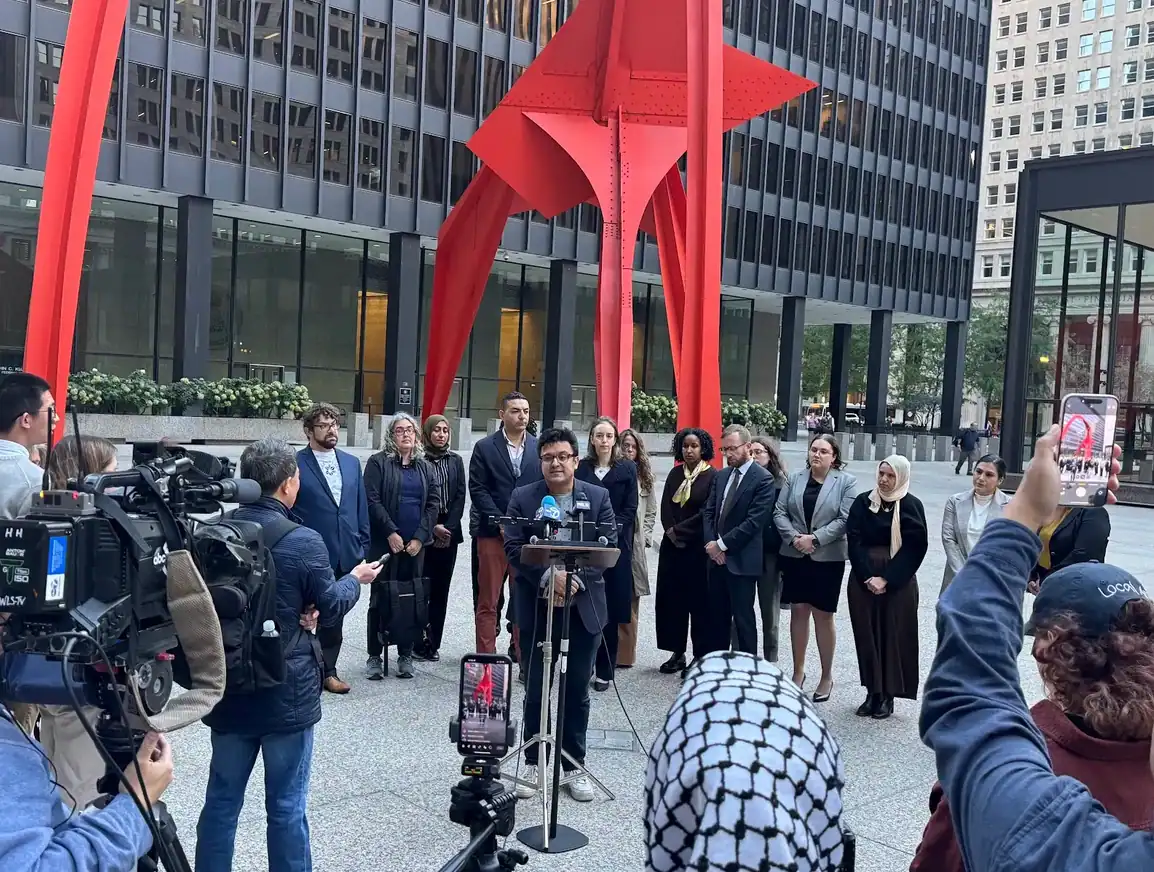
Current 2026 Status: Enrollment Holds and Deadlines
As of March 11, 2026, the “antisemitism training” remains a non-negotiable requirement at Northwestern. For students who did not complete the module in 2025, the final deadline to avoid “discontinuation” of their student status passed on February 2, 2026. University records indicate that fewer than three dozen students ultimately faced registration holds, as most non-compliant students chose to complete the training once the legal challenge faltered.
This case serves as a warning for those navigating professional and academic environments in 2026, much like the Tyler Perry digital hygiene cases. In an era of heightened institutional scrutiny, “policy compliance” is often prioritized by the courts over “individual protest.”
Lessons for Students and Employees in 2026
If you are facing mandatory training that you find ethically or politically objectionable, the Northwestern dismissal offers three vital takeaways:
- “Acknowledgment” is not “Agreement”: Courts generally view anti-bias training as a tool for workplace and campus safety. Signing an acknowledgment that you watched the video rarely qualifies as a violation of your personal civil rights.
- Exhaust Internal Remedies: Before filing a federal suit, engage with student government and faculty senates. In the Northwestern case, the Faculty Assembly’s vote against the training provided strong documentation for the plaintiffs, even if it didn’t win the case.
- Calculate the Risk: As seen with the Northwestern “registration holds,” institutions have significant power to withhold degrees, visas, and financial aid for non-compliance with administrative rules.
Conclusion: The Gavel Falls on Mandatory Training
As of March 11, 2026, the Northwestern anti-bias lawsuit is a closed chapter. While the plaintiffs reserved the right to refile (dismissal without prejudice), the current judicial climate suggests that “anti-bias” education will remain a standard pillar of the American university experience for the foreseeable future. For the team at K. Hoffman Law, this case underscores a growing 2026 reality: the courtroom is a difficult place to win a war of ideologies when it conflicts with institutional policy.