
General Motors is entering a high-stakes legal season as multiple class action lawsuits involving its signature V8 engines move toward trial. As of March 11, 2026, the litigation has expanded to include nearly one million vehicles equipped with the 6.2L L87 V8 engine. While GM marketed these engines for their sophisticated Dynamic Fuel Management (DFM) and Active Fuel Management (AFM) systems—designed to optimize fuel economy by deactivating cylinders—plaintiffs allege these very systems are causing “catastrophic and life-threatening” engine seizures.
At K. Hoffman Law, we are tracking these developments closely, as they represent a massive breach of consumer trust. This litigation mirrors the Nespresso product defect case in its focus on engineering failures, and parallels the Krispy Kreme data breach settlement in terms of the sheer volume of affected individuals. For owners of 2019–2024 Silverados, Sierras, and Escalades, the “fuel economy” promised by GM has instead resulted in repair bills often exceeding $10,000.
The 2026 Consolidated Complaint: L87 Engine Failures
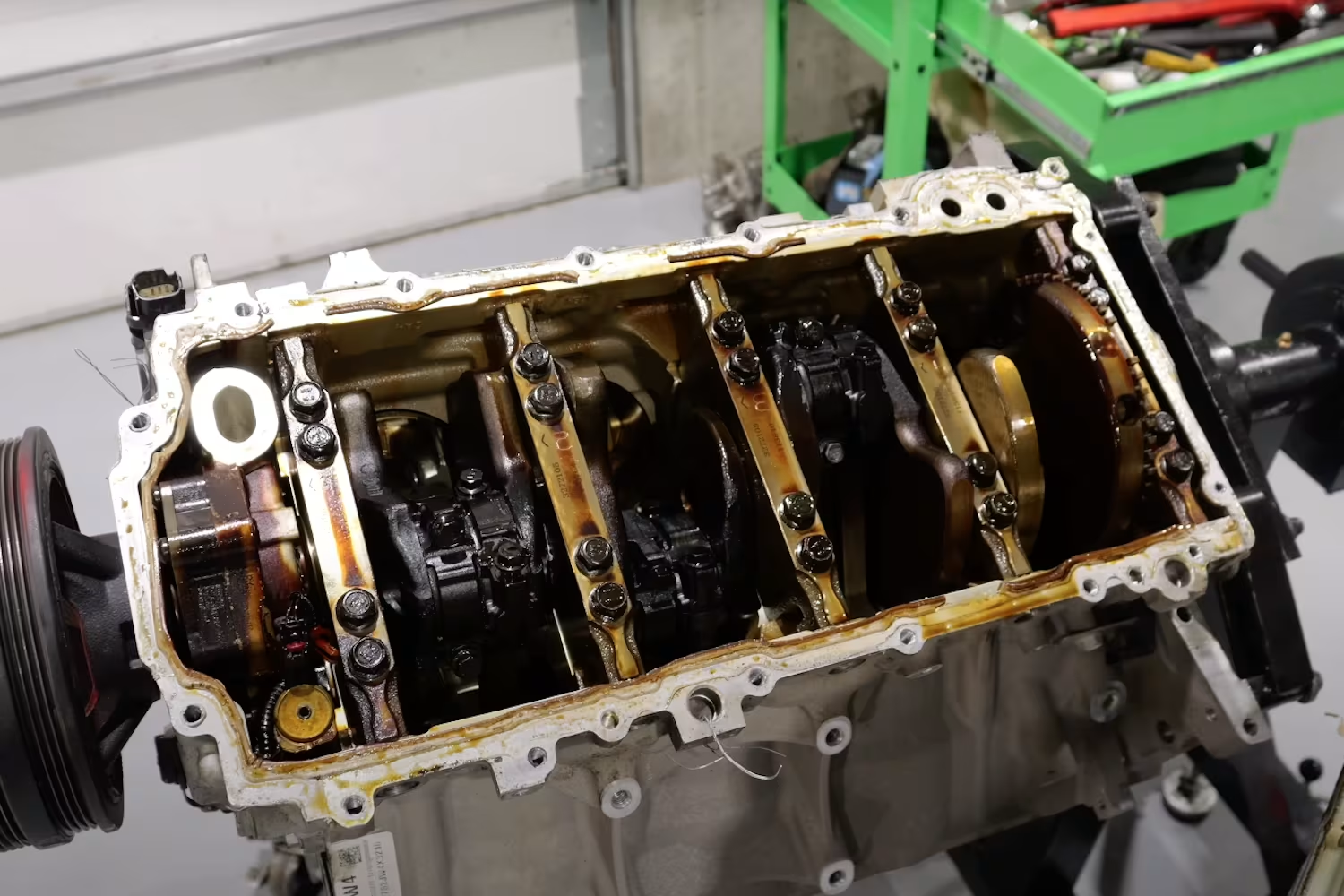
On February 26, 2026, a massive consolidated class action complaint was filed in the Eastern District of Michigan (Case No. 4:25-cv-11481). The lawsuit merges a dozen previous filings into a single unified front against GM. The core of the complaint focuses on “internal engine component failure”—specifically involving connecting rods, crankshaft bearings, and the fuel management lifters.
The lawsuit alleges that the DFM/AFM systems, intended to improve MPG, create uneven wear on engine components. Key updates as of March 2026 include:
- The “Sudden Death” Defect: Owners report engines failing with as little as 4,000 miles on the odometer. The failure often manifests as a “loud mechanical bang” followed by an immediate loss of power and steering—a critical safety risk at highway speeds.
- Backordered Parts: Due to the widespread nature of the defect, replacement L87 engines are currently on a multi-month backorder. This has left thousands of owners “stranded” without their primary vehicles, even those still under the 5-year/60,000-mile powertrain warranty.
- The “Oil Change” Fix: Plaintiffs argue that GM’s current recall “fix”—which involves switching to a higher viscosity oil—is a “superficial band-aid” that fails to address the underlying mechanical flaws in the bearing rods and lifters.
Fuel Economy vs. Reliability: The AFM/DFM Controversy
The lawsuit highlights a growing frustration among 2026 consumers: the trade-off between EPA-mandated fuel efficiency and long-term engine reliability. General Motors’ Active Fuel Management (AFM) and Dynamic Fuel Management (DFM) allow the engine to run on as few as two cylinders to save gas. However, the lawsuit claims these “lightweight lifters” are improperly positioned and prone to collapsing.
As seen in the Northwestern University litigation, where institutional policy was challenged for its real-world impact, this case challenges GM’s engineering policy. If the court finds that the fuel management systems are inherently defective, it could force one of the largest automotive buybacks in history, affecting models including:
- Chevrolet Silverado 1500, Tahoe, and Suburban (2019–2024)
- GMC Sierra 1500, Yukon, and Yukon XL (2019–2024)
- Cadillac Escalade and Escalade ESV (2021–2024)
Status of Prior Settlements: The 5.3L V8 Payouts
While the L87 6.2L litigation is just beginning its discovery phase, a prior battle involving the 5.3L V8 LC9 engine reached its final resolution in late 2025. As of January 2026, valid claimants in California, North Carolina, and Idaho have begun receiving checks from a **$150 million settlement** fund.
That case focused on “excessive oil consumption,” a problem also linked to the cylinder deactivation systems. The average payout for those owners was approximately $3,380—a figure that the current 6.2L plaintiffs argue is insufficient, given that a total engine replacement for a modern 2024 model can cost three times that amount. This disparity is a central theme in our coverage of the Nationwide settlement, where “adequate compensation” remains the most debated term in the courtroom.
What Should GM Owners Do Right Now?
If you own a GM vehicle equipped with a V8 engine and have experienced “ticking” noises, rough idling, or a “reduced engine power” warning, take the following steps to protect your legal rights:
- Demand a Repair Order: Even if the dealer says the noise is “normal,” ensure every complaint is documented in an official service record. This is vital for “Lemon Law” and class action eligibility.
- Check Your VIN: Visit the NHTSA website to see if your vehicle is part of the April 2025 recall (Recall No. 25V-290).
- Save All Receipts: If you paid out-of-pocket for a rental car or engine repair, keep those records. As seen in the Tyler Perry digital evidence battles, the burden of proof often rests on the precision of the victim’s documentation.
Conclusion: The Cost of Efficiency
As of March 11, 2026, the GM V8 engine lawsuit has become a landmark case in automotive law. It forces a difficult conversation: at what point does a fuel-saving technology become a dangerous liability? For the team at K. Hoffman Law, the upcoming March 30 deadline for GM to file its defense motions will be the next major indicator of whether owners will see a settlement or a full-scale jury trial. For now, the “rugged and reliable” image of the American V8 is under its most intense scrutiny in decades.