If you get into a minor fender bender with a passenger car, the insurance process is usually pretty straightforward. You swap information with the other driver, report the incident, and let the insurance companies figure out the property damage and medical bills.
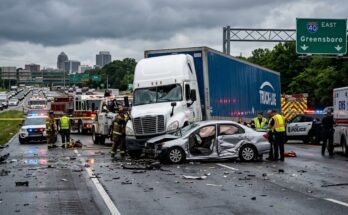
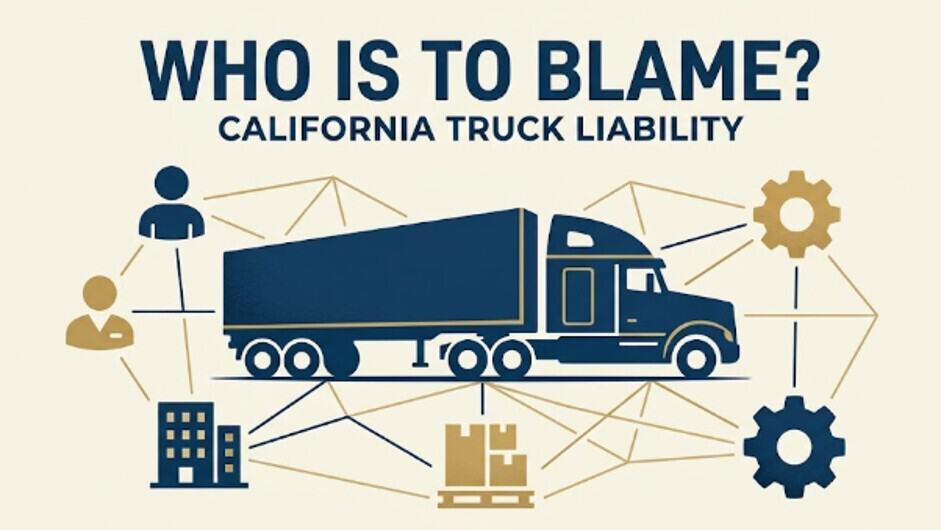
A collision with a commercial semi-truck throws that entire simplicity out the window. When an 80,000-pound rig hits a standard passenger car, the aftermath is complicated in more ways than one. You quickly realize that you aren’t just dealing with the person who was behind the wheel. Instead, you are suddenly facing a whole web of corporations, shipping companies, maintenance contractors, and massive insurance policies.
When the Fault Lies with the Driver
The most obvious place to start looking for answers is with the truck driver. Driving a commercial vehicle requires special training and a commercial driver’s license, and operators are held to much higher safety standards than everyday drivers.
Unfortunately, mistakes happen constantly. Truck drivers often face intense pressure to hit tight delivery deadlines, which can lead to reckless decisions. Fatigued driving is one of the most common causes of highway wrecks, especially when drivers push past the strict hours-of-service limits set by the federal government. Distracted driving, speeding to beat traffic on crowded freeways like Interstate 5 or Highway 99, or driving under the influence of stimulants to stay awake are all examples of driver negligence that can cause a devastating crash.
Why the Trucking Company Shares the Blame
While the driver may have caused the actual impact, the company they work for is rarely off the hook. Under California law, employers are generally held legally responsible for the actions of their employees while they are on the clock.
Beyond that basic rule, the trucking company might have engaged in its own negligent practices that set the accident in motion. For instance, a company might hire a driver without checking their commercial record, ignoring a history of serious traffic violations or DUIs. Other times, companies actively pressure their drivers to ignore safety laws to keep profits high, or they skimp on routine maintenance, sending trucks out onto the highway with worn-out brakes or bald tires.
Hidden Parties: Shippers and Manufacturers
Sometimes, the root cause of a truck accident involves a company that was never even at the scene of the crash. Cargo loading companies are a perfect example. If a third-party shipping company overloads a trailer or secures heavy freight incorrectly, that cargo can shift violently during a turn or sudden stop. When the weight shifts, the driver can easily lose control, causing the truck to jackknife or roll over.
Mechanical parts can also fail at highway speeds. If a critical component like the steering mechanism, braking system, or a tire fails because it was poorly designed or manufactured, the company that built that specific part can be held liable through a product liability claim.
Gathering the Proof to Build a Case
Untangling all of these overlapping layers of fault requires a deep dive into the evidence, and time is not on your side. Trucking companies have their own corporate defense teams that often arrive at the accident scene within hours to protect their bottom line.
To build a strong case, a legal team has to move quickly to preserve vital information. This includes pulling data from the truck’s internal black box, which records exact speeds and braking patterns right before the crash. Attorneys will also audit digital logbooks to check for hours-of-service violations and review internal dispatch messages to see if the company forced the driver to take safety risks.
Protegiendo a la Comunidad Hispana de las Aseguradoras
Después de un accidente, los ajustadores de seguros de las grandes empresas suelen llamar rápido para intentar cerrar el caso por la menor cantidad de dinero posible. A veces intentan aprovecharse de las barreras del idioma, presionando a las víctimas para que den declaraciones grabadas o firmen documentos complejos en inglés que les quitan el derecho a reclamar sus gastos médicos.
Es muy importante saber que en California, su estatus migratorio no tiene ninguna relevancia en su derecho a recibir una compensación justa por sus lesiones. Para protegerse de estas tácticas corporativas, lo mejor es buscar un abogado de accidentes de camión con experiencia que hable su idioma. Un profesional bilingüe puede revisar cada papel antes de que usted firme nada, asegurando que nadie se aproveche de su situación mientras usted se enfoca en recuperarse.
Finding Your Next Steps
You should not have to fight multiple corporations and their high-powered insurance lawyers by yourself while you are trying to heal. If you or someone you love has been injured in a collision with a commercial vehicle, getting professional legal guidance is the best way to protect your financial future.