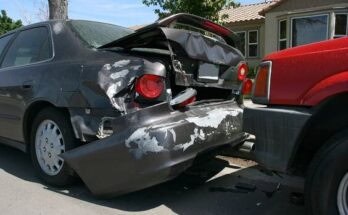

The moments immediately following a car accident are almost always a blur of adrenaline, flashing lights, and unexpected stress. While your immediate focus is naturally on your health and getting your vehicle to a repair shop, the financial reality of a collision sets in quickly.
According to data from the National Safety Council (NSC), the average economic cost of a motor vehicle crash involving injuries exceeds $40,000 per person. Medical bills, lost wages from missed work, and transportation adjustments add up fast.
Many drivers assume that standard liability insurance or health insurance will seamlessly handle every expense. However, standard policies often leave massive gaps, which is why exploring alternative avenues like a no-fault car crash claim can be an essential strategy for securing immediate medical and structural financial relief. If you find yourself facing an uncooperative insurance company during this process, partnering with an experienced car accident lawyer can protect your rights and help you secure the maximum compensation available. To protect your wallet, you need to know about the lesser-known coverage add-ons and policy features that injured drivers frequently leave on the table.
The Immediate Financial Safety Net: MedPay and PIP
Medical Payments Coverage (MedPay)
MedPay pays for immediate medical expenses for you and your passengers after an accident, regardless of who caused the crash. It is a strictly no-fault addition to your auto insurance policy that kicks in instantly.
Because it lacks the deductibles or co-pays associated with health insurance, MedPay is highly efficient for handling upfront costs. It covers ambulance fees, emergency room copays, X-rays, and even dental treatment resulting from a crash. If your health insurance has a $5,000 deductible, utilizing $5,000 in MedPay coverage can effectively erase that out-of-pocket burden.
Personal Injury Protection (PIP)
Personal Injury Protection is an expanded form of medical coverage that pays for medical bills alongside broader economic damages like lost wages and essential everyday services. PIP acts as an upgraded version of MedPay, stepping in to ensure an injury doesn’t completely derail your household budget.
If your injuries prevent you from working, PIP typically reimburses a significant percentage of your lost income, usually up to 60% or 80% of your salary depending on your policy limits. Additionally, if you need to hire help for tasks you can no longer perform—such as childcare, house cleaning, or lawn maintenance—PIP can help cover those operational costs while you recover.
Navigating No-Fault Claims Across State Lines
Understanding the No-Fault System
A no-fault auto insurance system requires drivers to carry PIP insurance so their own provider covers their medical bills and lost earnings, no matter who caused the accident. This framework was designed to reduce litigation and speed up the claims process for minor injuries.
In a traditional “at-fault” state, you have to wait for the insurance companies to investigate the accident and determine liability before you receive a settlement payout. In a no-fault state, that administrative gridlock is bypassed for medical care. Your own insurance provider pays your bills immediately up to your policy limit, allowing you to focus on physical recovery rather than legal disputes.
How No-Fault Rules Impact At-Fault Drivers
Even if you live and drive in a traditional tort (at-fault) state, understanding how these laws interact remains incredibly important. Drivers frequently cross state lines for work, family visits, or vacation, meaning an accident could easily occur in a jurisdiction with entirely different insurance laws.
When an out-of-state accident happens, your insurance policy may feature a “broadening clause.” This clause automatically adjusts your coverage limits and rules to match the minimum legal requirements of the state where the collision occurred. Data compiled by the National Highway Traffic Safety Administration (NHTSA) underscores how vastly driver environments and local regulations shift across state lines, making it vital to know how your home policy adapts when traveling.
Hidden Coverages That Keep You Moving
Uninsured/Underinsured Motorist Bodily Injury (UM/UBI)
UM/UBI coverage steps in to pay your medical bills and lost wages if you are hit by a driver who carries no insurance or carries limits too low to cover your total damages. This coverage is essential because liability insurance minimums vary wildly by state and are often insufficient.
Consider a scenario where you sustain an injury requiring a surgery that costs $75,000, but the driver who hit you only carries a state-minimum liability policy of $25,000. Without Underinsured Motorist coverage, you would be left responsible for the remaining $50,000 balance out of pocket. UM/UBI closes that gap, acting as a crucial shield against financially irresponsible drivers.
Rental Car Reimbursement and Loss of Use
Rental car reimbursement pays for a temporary vehicle while your car is in the shop, while Loss of Use compensation provides financial recovery for the inconvenience of losing your primary mode of transportation. These two coverages are distinct, yet both protect your daily routine.
- Rental Reimbursement: This is an optional add-on with your own insurer that pays a daily allowance (e.g., $40 per day up to a 30-day maximum) for a rental car while your vehicle undergoes repairs.
- Loss of Use: If the other driver was at fault, you can claim Loss of Use damages from their insurance company. This pays you for the daily value of your vehicle for every day it sits unavailable in the repair shop, even if you choose not to actually rent a replacement car.
Protect Your Recovery by Reviewing Your Policy Early
The ideal time to understand your auto insurance policy is long before you ever need to file a claim. Take a moment this week to pull up your insurance coverage declarations page or chat with your insurance agent.
Ask specifically about adding MedPay, PIP, or Uninsured Motorist coverage to your framework. For just a few extra dollars a month, these overlooked coverage options can transform a catastrophic financial crisis into a structured, manageable recovery process.