Neil Young vs. Chrome Hearts: The Trademark Battle Over “The Chrome Hearts”
In the intersection of rock-and-roll history and high-end fashion, a new legal storm has gathered. The Neil Young Chrome Hearts Trademark Lawsuit (Chrome Hearts, LLC v. Neil Young et al.), filed in the Central District of California, pits a legendary musician against one of the world’s most protective luxury brands. As of March 2026, the case has moved into a critical phase of discovery, as both parties argue over whether a 1976 song lyric can coexist with a billion-dollar fashion trademark in the modern digital marketplace.
The Origins of the Conflict: A 50-Year-Old Lyric
The dispute began in late 2024 when Neil Young formed a new backing band titled “Neil Young and The Chrome Hearts.” Young, known for his deep ties to automotive and industrial imagery, reportedly chose the name as a tribute to his 1976 hit song “Long May You Run,” which famously features the lyric: “With your chrome heart shining in the sun.” However, Chrome Hearts LLC—the Los Angeles-based luxury label founded in 1988—was not moved by the artistic sentiment.
The fashion house, famous for its gothic-inspired jewelry and leather goods, alleges that Young’s use of the name is a blatant infringement of its federally registered trademarks. Chrome Hearts argues that because they have spent decades building a brand synonymous with rock-and-roll aesthetics, the public will mistakenly believe the band is an official collaboration or endorsement. This struggle over “brand identity” and the potential for consumer confusion is a recurring theme in major litigation, such as the Amazon Class Action Lawsuit 2025, where the focus remains on how corporate systems influence consumer perception.
Merchandise: The Legal Battleground
While Young’s use of the name for a musical group might fall under artistic expression, the real legal trouble lies in the “Trade Channels.” Chrome Hearts’ attorneys highlighted that the band has been selling t-shirts, hoodies, and tote bags prominently featuring the words “The Chrome Hearts” at concert venues and online. Since Chrome Hearts LLC holds primary trademarks in International Classes 14 (jewelry) and 25 (clothing), they argue that the band is directly competing in their commercial space.
The complaint includes evidence of “actual confusion,” citing third-party vendors who have already begun marketing “mash-up” shirts that combine Neil Young’s face with Chrome Hearts’ signature Old English font and cross motifs. This type of unauthorized market overlap is a major concern for luxury brands, much like the precision-based disputes seen in the Tesla Odometer Lawsuit, where accurate data and clear branding are essential for maintaining consumer trust and secondary market value.
2026 Case Status: The First Amendment Defense
In early 2026, Neil Young’s legal team filed a motion to dismiss, relying on the “Rogers Test.” This legal standard typically protects artists who use trademarks in their work, provided the use is artistically relevant and not explicitly misleading. Young’s team argues that the name is a core part of his creative history and that no “reasonable consumer” would confuse a $45 concert tee with a $3,000 Chrome Hearts leather jacket.
However, recent Supreme Court rulings (such as Jack Daniel’s Properties, Inc. v. VIP Products LLC) have narrowed the scope of the Rogers Test when the trademark is used “as a mark”—meaning, to identify the source of the goods. Because the name appears on the neck labels and promotional posters of the merchandise, the court may find that it functions as a brand rather than just art. This legal “narrowing” mirrors the strict regulatory environments found in health-claims litigation, such as the ZOA Energy 0-preservatives settlement, where literal accuracy in branding was required regardless of the celebrity’s intent.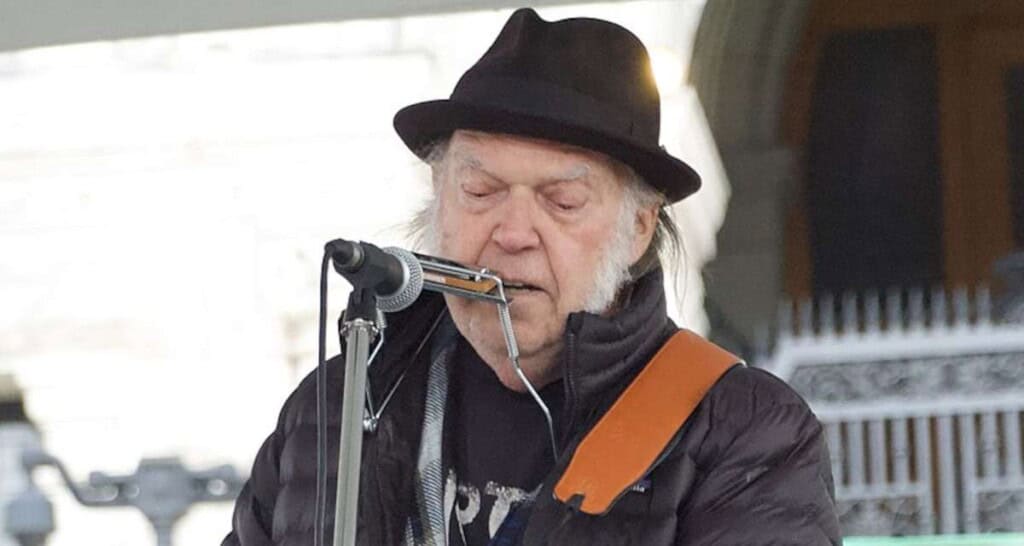
Recent Tour Cancellations and Studio Delays
The litigation has had real-world consequences for Young’s schedule. In February 2026, Young announced the cancellation of his “Love Earth” European tour with The Chrome Hearts, citing a need for a “break.” While the official statement was vague, industry insiders suggest the legal pressure to rebrand mid-tour may have played a significant role. Currently, reports indicate that Young and the band are in the studio working on a follow-up to their 2025 album Talkin’ to the Trees, though it remains unclear if the album will be released under the disputed name.
Conclusion: Art vs. Commerce in 2026
The Neil Young Chrome Hearts lawsuit is a bellwether for how intellectual property is handled in an era where fashion and music are inextricably linked. Whether Young is forced to pay damages or simply rebrand his band, the case serves as a warning to all creators: even a decades-old lyric can be a legal liability if it clashes with a registered trademark. As the case moves toward a potential trial in late 2026, the music world is watching closely to see if “Heart of Gold” can withstand the weight of “Chrome.”