
The Trader Joe’s Uncrustables Lawsuit: Trademark Infringement and the “Copycat” Debate
In the competitive world of frozen snacks, few items are as recognizable as the round, crustless peanut butter and jelly sandwich. However, in late 2025 and early 2026, a major legal battle erupted between food giant J.M. Smucker Co. and the popular grocery chain Trader Joe’s. The Trader Joe’s Uncrustables Lawsuit (The J.M. Smucker Company v. Trader Joe’s Company) centers on allegations of trademark infringement, trade dress dilution, and deceptive trade practices. As of March 2026, this case has become a focal point for intellectual property (IP) experts and consumer advocates alike.
The Core Allegations: Beyond the Sandwich
The lawsuit, filed in the U.S. District Court for the Northern District of Ohio, alleges that Trader Joe’s “Crustless Peanut Butter & Strawberry Jam Sandwiches” are an “obvious copycat” of Smucker’s iconic Uncrustables. Smucker’s points to several specific design elements that they claim are protected by federal trademark registrations. These include the circular, “pillow-like” shape, the specific “undulated crimping” around the edges, and the packaging imagery—specifically a sandwich with a bite taken out of it to reveal the filling.
Smucker’s claims they have invested over $1 billion in the Uncrustables brand over the last 20 years, turning it into a nearly $1 billion-per-year business. They argue that Trader Joe’s is unfairly benefiting from this “goodwill” by creating a product so similar that consumers are likely to believe the two are affiliated. This struggle for brand protection and the prevention of consumer confusion is a common theme in high-stakes litigation, much like the JustFab VIP membership lawsuit, where transparency and consumer perception were central to the legal claims.
Is a Crimped Edge Functional or Aesthetic?
The primary defense expected from Trader Joe’s—and a point of debate among legal scholars—is the “functionality” of the design. Under trademark law, you cannot protect a feature that is functional or essential to the use of the product. Trader Joe’s is likely to argue that the round shape and crimped edges are the only effective way to seal a crustless sandwich to prevent the jelly from leaking during mass production and freezing. If the court agrees that these features are functional, Smucker’s trademark claims could fail.
This technical distinction between a “source identifier” and a “functional necessity” is a hurdle many companies face when protecting their IP. For example, in the Colorado ICE subpoenas lawsuit, the legal arguments hinge on the specific authority and function of administrative demands rather than just their appearance. Similarly, the court here must decide if Smucker’s “owns” the crimp or if it belongs to the public domain of sandwich-making.
2026 Legal Developments and Consumer Confusion
As of March 2026, the case has moved into the discovery phase. One of the strongest pieces of evidence presented by Smucker’s involves social media posts where customers mistakenly claimed that Trader Joe’s was actually contracting with Smucker’s to produce a private-label version of Uncrustables. This “actual confusion” is often a “smoking gun” in trademark cases, as it proves that the similarity isn’t just theoretical—it’s actively misleading the public.
Smucker’s is seeking an injunction to stop the sale of the Trader Joe’s sandwiches, the destruction of all infringing packaging, and unspecified monetary damages for lost profits. This aggressive stance is similar to the demands seen in the ZOA Energy preservatives settlement, where corporate accountability and labeling accuracy were prioritized through a multi-million dollar resolution.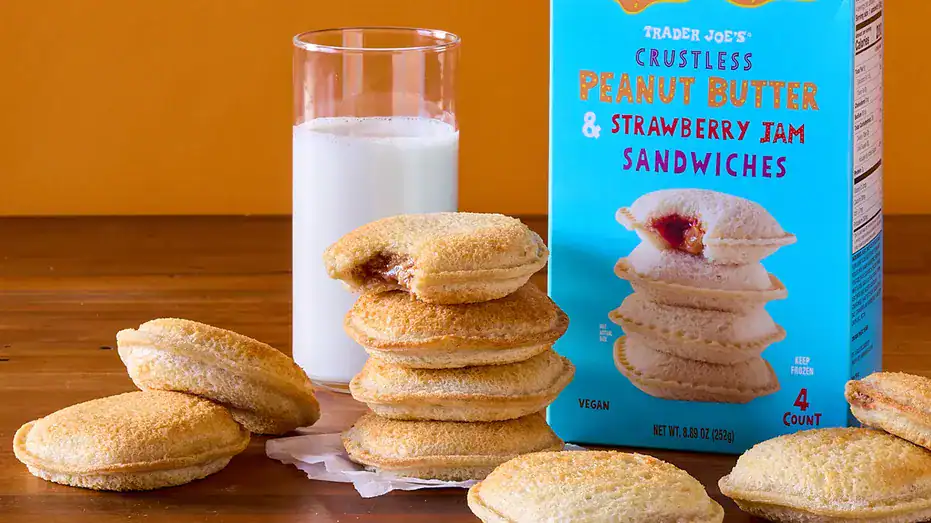
The Rise of “Dupe Culture”
The Trader Joe’s Uncrustables Lawsuit highlights a growing trend in the grocery industry: the rise of the “dupe.” Retailers like Trader Joe’s and Aldi have built massive followings by creating affordable versions of national brand favorites. While usually legal, this case tests the boundary of how close a retailer can get to the original before it constitutes “trademark dilution.” For more on how tech companies handle similar data and design disputes, see our analysis of the Tesla Odometer Lawsuit, which explores the limits of corporate control over product information.
Conclusion: What’s Next for the Frozen Aisle?
The Trader Joe’s Uncrustables Lawsuit is far from over. If Smucker’s wins, it could force a major redesign of store-brand snacks across the United States. If Trader Joe’s prevails, it will signal a “green light” for more retailers to produce products that mimic the functional designs of national brands. For now, the “Crustless Peanut Butter & Strawberry Jam Sandwiches” remain on the shelves, but their future—and the future of the crimped edge—hangs in the balance of the Ohio federal court. As we track this “sticky” situation through late 2026, it serves as a reminder that even the simplest lunchbox staple is protected by a complex web of modern law.