Trump vs. WilmerHale Lawsuit: 2026 Legal Battle & Executive Order Summary
The Trump vs. WilmerHale lawsuit (Wilmer Cutler Pickering Hale and Dorr LLP v. Executive Office of the President) has emerged as one of the most consequential legal confrontations of 2025 and 2026, pitting the executive branch against the independent legal bar. The conflict began in March 2025 when President Donald Trump issued a targeted executive order aimed at sanctioning WilmerHale, one of Washington D.C.’s most prominent law firms. As of March 2026, the case remains in a state of high-stakes litigation following a series of dramatic courtroom reversals.
The following article provides a comprehensive overview of the executive actions taken against the firm, the initial judicial rulings striking them down, and the latest 2026 updates regarding the Department of Justice’s (DOJ) erratic appeal process.
The Catalyst: Executive Order 14250
On March 27, 2025, President Trump signed Executive Order 14250, titled “Addressing Risks From WilmerHale.” The administration cited the firm’s historical ties to former Special Counsel Robert Mueller—who was once a partner at the firm—as a primary reason for the sanctions. The White House accused the firm of supporting the “weaponization of government” and engaging in “partisan representations” that were detrimental to American interests.
The order sought to impose several unprecedented penalties on the firm and its employees:
- Security Clearance Suspension: The order directed all federal agencies to immediately suspend security clearances for any individuals employed by WilmerHale.
- Access Restrictions: It restricted the firm’s employees from accessing federal government buildings and prohibited federal agencies from using WilmerHale’s Sensitive Compartmented Information Facilities (SCIFs).
- Contract Termination: The order mandated that government agencies review and, where possible, terminate any active contracts with WilmerHale or entities that disclosed significant business dealings with the firm.
- Hiring Ban: Federal agencies were instructed to refrain from hiring any former WilmerHale employees unless they obtained a specific waiver from the Office of Personnel Management.
The Lawsuit: WilmerHale v. Executive Office of the President
WilmerHale, represented by appellate stars Paul Clement and Erin Murphy, immediately challenged the order in the U.S. District Court for the District of Columbia. The firm argued that the executive action was a retaliatory strike that violated the First, Fifth, and Sixth Amendments of the U.S. Constitution.
In May 2025, Senior Judge Richard Leon issued a landmark 73-page opinion granting summary judgment in favor of the law firm. Judge Leon was blistering in his critique of the administration’s actions, stating that the order “shouts through a bullhorn: If you take on causes disfavored by President Trump, you will be punished!” The court ruled that the order represented unconstitutional viewpoint discrimination and an attempt to coerce the legal profession into political submission. Similar rulings were issued in favor of other targeted firms, including Perkins Coie and Jenner & Block.
The 2026 Appeal Reversal: A Courtroom About-Face
Following the lower court’s defeat, the DOJ initially appealed the ruling to the D.C. Circuit Court of Appeals. However, the litigation took a strange turn in early March 2026. On March 2, 2026, the DOJ filed a motion to voluntarily dismiss its appeal, which appeared to end the administration’s attempt to enforce the sanctions against WilmerHale and several other “Big Law” firms.
In a shocking move just 24 hours later, the DOJ abruptly reversed its position. On March 3, 2026, the government filed a new motion withdrawing its previous dismissal, stating it would continue the legal fight to uphold the executive orders. This unexplained “about-face” has created significant uncertainty within the legal community, though the orders currently remain blocked by the lower court’s permanent injunction while the appeal proceeds.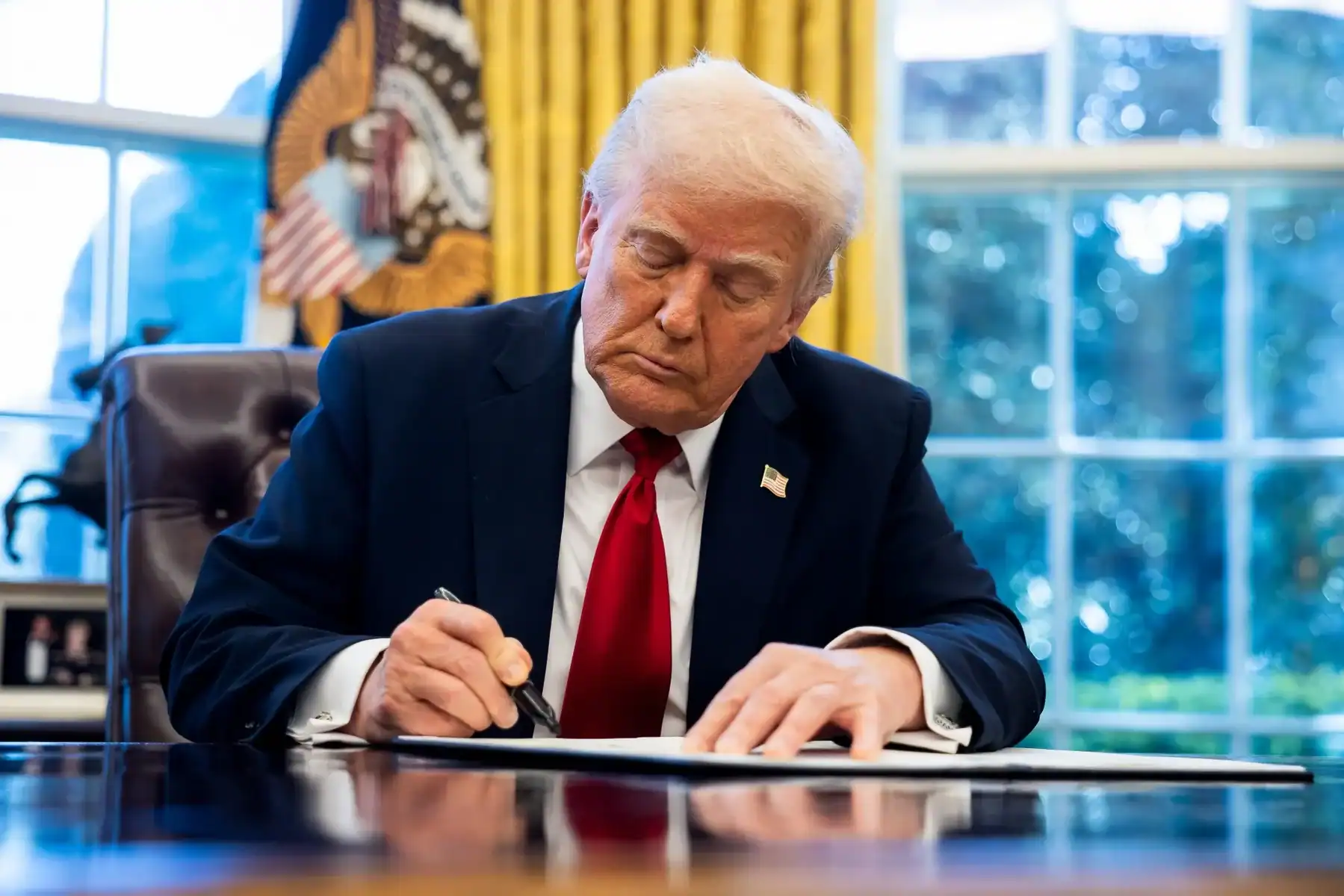
Settlements and the “Pro Bono” Extract
While WilmerHale chose to fight the administration in court, the Trump vs. WilmerHale lawsuit occurred alongside a broader trend of corporate capitulation. According to 2026 reports, nine other major law firms—including Paul Weiss—opted to settle with the administration rather than risk the existential threat of an executive order. As part of these settlements, these firms collectively agreed to provide approximately $940 million in pro bono legal services for initiatives that align with the Trump administration’s stated priorities.
WilmerHale has remained firm in its stance, with a spokesperson stating that the litigation is about “defending our clients’ constitutional right to retain the counsel of their choosing and defending the rule of law.” The outcome of the 2026 appeal is expected to set a definitive precedent for the limits of executive power over private legal entities and standardized professional regulations.
Current Status and Conclusion
As of March 2026, the Trump vs. WilmerHale litigation is ongoing at the appellate level. Although the executive order is currently unenforceable due to Judge Leon’s 2025 ruling, the administration’s recent decision to pursue the appeal indicates a long-term commitment to reshaping the “Big Law” landscape. This case serves as a critical test of judicial independence and the First Amendment rights of the American bar.